Little Faith, Faith, and Great Faith

Photo by Tobi on Pexels.com

Would you like to join me for a little boat ride on the lake? Wonderful! I must warn you though, the weather is going to get quite rough. Don’t worry; we’ll be just fine.

Can you imagine being on a boat when a furious storm comes up? Would you have faith in the captain to get you out of danger? Let’s look at the disciples’ faith when they encountered this situation.

23 “Then he got into the boat and his disciples followed him. 24 Suddenly a furious storm came up on the lake, so that the waves swept over the boat. But Jesus was sleeping. 25 The disciples went and woke him, saying, “Lord, save us! We’re going to drown!”

26 He replied, “You of little faith, why are you so afraid?” Then he got up and rebuked the winds and the waves, and it was completely calm.

27 The men were amazed and asked, “What kind of man is this? Even the winds and the waves obey him!” Matthew 8:23-27

In the midst of the storm, the disciples’ fear was greater than their faith.

Though it would be easy to blame the disciples for their lack of faith, I’m sure many of us have fallen into that same problem. During the storms of our lives, we allow our fear to grow instead of our faith.

Jesus points out the disciples’ “little faith” and asks why they are so afraid, right before He rebukes the winds and the waves to bring calm. What’s the lesson for the disciples, and for us?

Jesus has authority over nature – have faith in Him.

In Matthew 9:1-8, we see another example of faith. This time, it’s not “little faith.” In this account, we read about some men who bring a paralyzed man to Jesus. What does Jesus notice about them? Their faith! The fact that they brought this man to Him was an act of faith. It’s notable though that He doesn’t heal the man physically right away. What does He do? He forgives the man’s sins.

“When Jesus saw their faith, he said to the man, “Take heart, son: your sins are forgiven.”

However, just as Jesus proved His authority over nature, here He proves His authority to forgive sins. Verse 6 reads, “’But I want you to know that the Son of Man has authority on earth to forgive sins.’ So he said to the paralyzed man, “Get up, take your mat and go home.’”

What was the lesson for the teachers of the law who thought Jesus was blaspheming and for us? Jesus has authority to forgive sins. Have faith in Him.

Our last example shows us an unexpected someone of “great faith.” You can read the account in Matthew 8:5-13.

A centurion approaches Jesus and asks Him to heal his servant who is at home, paralyzed and suffering. Jesus asks the centurion, “Shall I come and heal him?” The centurion humbly said he didn’t deserve to have Jesus under his roof. Instead, he told Jesus, “just say the word, and my servant will be healed. For I myself am a man under authority, with soldiers under me. I tell this one, ‘Go,’ and he goes; and that one, ‘Come,’ and he comes…”

Now comes Jesus’ response, which is worth reading slowly. “When Jesus heard this, he was amazed and said to those following him, ‘Truly I tell you, I have not found anyone in Israel with such GREAT FAITH.’” (v. 10 emphasis mine).

What made this Roman soldier’s faith so great?

  1. He didn’t consider himself worthy to have Jesus come under his roof (humility).
    1. One commentator noted: “Humble souls are made more humble by Christ’s gracious dealings with them.”
  2. The Centurion told Jesus to just “say the word.”
    1. He had faith Jesus could heal by His word alone. This is what we see in the creation account in Genesis. God spoke and it was done.
  3. The centurion had faith that Jesus has Divine power and command over all that is under him – the creatures of nature and nature itself. He recognized what so many of Jesus’ followers failed to recognize. Jesus not only has the ability to heal sickness, He has the AUTHORITY to heal sickness. The centurion had FAITH that whatever Jesus told the sickness to do, it would do, because He has authority over it just as the centurion was under authority and had soldiers under him.

As we think about how to live out our faith, we can learn a few things from the Centurion:

  1. We can recognize the authority Jesus has over everyone and everything
  2. We can humble ourselves
  3. We can submit ourselves under His authority

I know the word “submit” can carry some negative connotations, so I would encourage you to read my post Surrender vs. Submit. And let’s remember that we are submitted to:

  • the One who created the heavens and the earth.
  • the one who loved us so much, He who was sinless, took on all sin and died that we might be reconciled to God.
  • the One who forgives sins.
  • the One who prepares a place for us in heaven, the One who gives us an inheritance that awaits us…and the list goes on.

Phew! What a boat ride we went on today. May we be people of GREAT FAITH, who trust our Captain, whether for ourselves or for others in the midst of storms, sickness and sin.

Let us go be radiant this week!

Running the Race

Are you a runner? I really admire runners. Runners have such dedication, commitment, endurance through good weather and bad, through rough terrain and smooth.

I always struggled with long distance running. When I had to run the mile in school, I thought I was going to keel over and die every year. It wasn’t just the physical part I struggled with – there was a psychological element too. As my heart pounded louder and louder and my legs ached with exhaustion, I remember thinking things like, “I’m never going to be able to do this, I can’t do this…”. I just didn’t have the confidence and I certainly didn’t have the perseverance. It might have helped if I’d had a coach or a trainer – someone who was an expert in running.

Now that you know this about me, you can probably imagine how I cringed ever so slightly as I read about the topic of faith (see my previous blogpost What is Faith?) in Hebrews and came across this passage:

12 “Therefore, since we are surrounded by such a great cloud of witnesses, let us throw off everything that hinders and the sin that so easily entangles. And let us run with perseverance the race marked out for us, fixing our eyes on Jesus, the pioneer and perfecter of faith. For the joy set before him he endured the cross, scorning its shame, and sat down at the right hand of the throne of God. Consider him who endured such opposition from sinners, so that you will not grow weary and lose heart.”

Hebrews 12:1-3

The author says “…let us run with perseverance the race marked out for us…” Not only are the Hebrews instructed to RUN, but they are also to do so with “perseverance” and in a race nonetheless!

Have you ever wondered what that race is exactly?

I always assumed it was a generalized metaphor for the Christian life, but as I studied it, it’s actually more specific. One commentator writes that it is: “The persevering obedience of faith in Christ.” In the end, the Hebrews were either going to win the crown of glory or have everlasting misery. That was the “race” set before them.

If we, like the Hebrew believers, have the same “race” set before us, which I believe we do, then how do we run it well? Answering this question is key in helping us know how to practically and tangibly live out our faith on a daily basis.

Hebrews 12:1 gives us the first step: 

By throwing off everything that hinders and the sin that so easily entangles.

What do professional runners wear? Hardly anything, right? They don’t want anything to slow them down or hinder them.

When we apply this same idea to our Christian lives, we need to remember that there are things in our lives that weigh us down. They might not even be sinful per se, but they might be influencing our ability to run well. What kinds of things in your life might be hindering your ability to have persevering obedience of faith in Christ?

We also have to recognize that our sins – whether they be from habits, circumstances, things we’re exposed to, or things we willfully choose, hinder us from running our race well. How? They entangle us so that we are flailing about instead of running with smooth, steady strides.

We need to throw off those sins, which requires intention and effort on our part. Would you allow me to encourage you to spend some time this week praying that God would reveal to you the sin that needs to be thrown off?

Our sins take away every motive we have for running the race. Who wants to run when they are weighed down or tangled up?

Not only that, our sins give power to discouragement. The author of Hebrews knew this and in chapter 10, he admonishes the believers to encourage one another. Like the Hebrews, we need encouragement to run the race, the persevering obedience in the faith, and we do that by getting rid of sin and spurring one another on.

The second step in how to run our race well according to Hebrews 12 is:

By fixing our eyes on Jesus

We are to look to His holy life; to His patience and perseverance in trials; to what He endured in order to obtain the crown, and to His final success and triumph.

Jesus is the AUTHOR and PERFECTOR of FAITH. The word “author” here indicates that He is the source, the cause.

He is the first and the last as an example of faith or of confidence in God – the most complete model that can be placed before us. He is above all.

The Hebrews, like us, are exhorted to look to him. One commentator noted that the idea of looking to Jesus was as if at the Grecian games there was one who stood before the racer who had previously carried away every victory; who had always been triumphant, and with whom there was no one who could be compared.

I envision running with Jesus right in front of me (He’s running backwards) and He’s making eye contact with me. “You’ve got this Suzie, keep your eyes on me. Don’t look over there.

Isn’t it easy to look at other people and what they have – such a nice house, ooh new car, I just love how she dresses, what a wardrobe!

Jesus is right in front of us giving us direction along the way – “keep your body aligned, don’t be distracted, remember your breathing – I gave you your first breath and I will continue to give you all you need to finish this race.”

We have to remember that WHATEVER Jesus asks us to do is ATTAINABLE!

Jesus is the Finisher of faith. This idea corresponds in meaning with the word “author” above. It means that he is the completer as well as the beginner; the last as well as the first. He is the Alpha and Omega, the beginning and the ending, the first and the last. He occupies this elevated position of being beyond comparison above all others.

The third step to running our race well is:

By fixing our thoughts on Jesus (Hebrews 3:1-6) – even more so when we are weary

“Consider him who endured such opposition from sinners, so that you will not grow weary and lose heart.”

It’s easy to grow weary when running. When that happens the author of Hebrews instructs them, and us, to:

  • Recall the suffering Jesus endured, to save them and us from eternal misery.
  • Steadfastly look to Jesus, which brings strengthening and keeps carnal desires in check.
  • Frequently consider Jesus. 

Living out our faith means running the race God has marked out for us. The running we do in this race, which is the persevering obedience of faith in Christ, is not something to dread like I did every time I had to run the mile. We actively throw off our sin and keep our thoughts and eyes on Jesus, our Coach, who runs with us, guides us and strengthens us. Our confidence comes from Him.

If your focus starts to blur or you feel yourself getting back into old habits of sin, talk to someone who will pray with you and encourage you to get your eyes back on Jesus.

Let us go be radiant as we run the race set before us.

If you’ve enjoyed this, or any of my other posts, would you consider subscribing? I would love to hear from you, please comment below. Feel free to share this blogpost others.

What is faith?

Hello friends! I know, it’s been a while. Though I’ve been silent on the blogging scene, God has still been at work in my life. In fact, He used that time to prepare me for something new.

After attending a women’s conference last spring, I felt strongly, and was encouraged by some close friends, that God wanted me to start a new women’s ministry at my church.

After much prayer, talking with my pastor and other church leaders, I was given the green light and started a ministry called, ARISE, where women can gather, grow and go.

I’m excited to share with you some of the content we’ve been learning about at our ARISE gatherings.

Our topic today: FAITH

We’ll start by looking at Hebrews 11:1, “Now faith is confidence in what we hope for and assurance about what we do not see.” Now, it seems as if this verse gives us a definition of faith, right? However, after doing a little research, I discovered that some have debated if this is a “definition of what faith is, or in reality a description of what faith does.” (Ellicott’s Commentary for English readers).

I love the idea of “faith does” kind of like Bob Goff’s book, Love Does, because it reminds us that faith, like love, is not passive.

Hebrews 11 is considered by some to be the “Hall of Fame” of faith because the author lists a number of faithful people found in the Bible and what they did to demonstrate their faith. The heading in my Bible for that chapter is “Faith in Action,” which goes back to the idea of “faith does.” The author of Hebrews is explaining the concept of faith by using examples from the Scriptures of people who, by a strong faith in God and in His promises, resisted huge temptations, sustained heavy persecutions, and obeyed, even when it was difficult.

Let’s look at the first part of the definition of faith in Heb. 11:1:

Confidence in what we hope for

The idea here is that “faith is a confidence that we shall receive the good things for which we hope, and … a foundation or ground for our expecting them;” because by faith we are justified, adopted into God’s family, and heirs of the things for which we hope; namely, eternal life.    Summarized from Benson’s Commentary.

And (this continues our definition in Heb. 11:1)

Assurance (evidence – strict proof, conviction, persuasion or demonstration) about what we do not see

This part of the verse is describing the assurance or evidence we have about the things of God – things that are invisible and eternal. Some might even say that the assurance described is equal to that which our outward senses give us of the things we can see. Our faith is founded upon the veracity and power of God – this is the evidence.

Putting it simply, faith is belief in who God is. Faith is acting on His Word, trusting that He is who He says He is and that His Word is true.

“Faith sees the invisible, believes the unbelievable,

and receives the impossible.”

Corrie Ten Boom

This quote reminds me of the healings we see in the New Testament.

If we read a few verses later in Hebrews 11:6, we can see why it’s important for us to have this kind of faith.  “And without faith it is impossible to please God, because anyone who comes to him must believe that he exists and that he rewards those who earnestly seek him.” Don’t we want to please the Creator of the heavens and earth; the One who sent His only Son to die for our sins?

How do we get this faith?

The book of Romans gives us two ways:

  1. by hearing (Ro. 10:17) “So faith comes from hearing, that is, hearing the Good News about Christ.” (NLT)

As we hear about God, who He is, and what He’s done, it evokes faith.

2. by distribution (Ro. 12:3) “For by the grace given me I say to every one of you: Do not think of yourself more highly than you ought, but rather think of yourself with sober judgment, in accordance with the faith God has distributed to each of you.”

God has distributed faith to His people.

Okay, Suzie, I’m with you so far, but let’s talk day-to-day. What does all this mean at a practical level in my life? Let’s look at the Thessalonians, a great example because they are commended for their faith.

Read 1 Thes. 1:1-4 here.

In this passage, we see that the Thessalonians:

  1. had “work produced by faith” – v. 3 (we’ll come back to this in a minute)
  2. had a reputation of faith – v. 8 It sounded out like the blast of a trumpet – such that they didn’t need to say anything about it. It was already known.
  3. put their faith in God (turning from idols to serve the living and true God and wait for His Son) – vs. 8, 9

What was their “work” produced by faith?

Essentially it means faithful activity, in another words, a work that was characterized by faith and prompted by faith, such as faith alone could have enabled them to accomplish. They were acts that showed an internal faith. These were likely acts of duty, holiness, and benevolence, which proved that they exercised faith in the Lord Jesus Christ.  Summarized from commentaries by Ellicott and Barnes.

The idea of exercising – of using, building, developing, making stronger is perfect because we can do that with faith. We see that idea carried forward in the passage when it says: “your labor prompted by love.” “This means a laborious toil undertaken for love’s sake, and done in the spirit of love;…” (Ellicott’s Commentary for English Readers)

John 6:29 brings us full circle. Jesus answered, “The work of God is this: to believe in the one he has sent.”

When it comes to walking in faith, we have to remember that walking is done by taking one step at a time.

The first step is to turn from idols and put our faith in God – just like the Thessalonians did – to believe in Jesus – the One God sent to redeem us, to save us, to sanctify us. That belief is an act of faith.

The second step is to be faithful in what God has called us to do – to serve – like the Thessalonians did. We serve with acts prompted by faith and love.

I believe there is a distinction between having faith and being faithful. We can say we have faith, but are we being faithful?

As you consider living and walking by faith, here are some questions for reflection.

  1. What kinds of things do we (even as believers) tend to put our faith in besides God?
  2. Where is it hard to live out our faith and why? What might we be able to do differently in those areas to better live out our faith?
  3. What do you think it looks like today for someone to have a reputation of faith?
  4. What do you do daily that you would classify or consider as living out your faith?
  5. What is one step of faith you can actively take this week?

If you read this far, thank you! I know this was a long one 🙂 I would love to hear your insights, so please leave a comment. Until next time, let us Go Be Radiant as we walk by faith.

The King of the Corona Virus

crown

In the midst of unprecedented and unparalleled times, our lives have been indelibly marked by the Corona Virus, a.k.a., COVID-19.

My life has been disrupted, right along with everyone else’s, and I’ve wanted to blog…but I think I needed a little time to process and I definitely needed a little inspiration from God.

I had bits and pieces of what I thought would be valuable to share…but not until right now did they all come together.

As I’ve reflected on our recent pandemic, here is what I’ve observed:

  • People are stepping up and stepping in, much like we see in Acts 4, 32 “All the believers were one in heart and mind. No one claimed that any of their possessions was their own, but they shared everything they had.”
  • Food pantry ministries have opened and expanded
  • Friends and neighbors are sharing household staple items that can’t be found in stores
  • Churches and para-church organizations have created websites full of timely resources
  • People are sharing their musical, artistic and/or creative talents to lift the spirits of others and provide meaningful worship experiences
  • Facebook groups have formed to offer support to parents who are now homeschooling their children and trying to work from home
  • People have created hilarious Memes and videos to provide comic relief

Perhaps the most sobering, and simultaneously inspiring, are those in Spain who go out on their balconies nightly at 8:00 to literally applaud for the many healthcare professionals who are working tirelessly to do all they can.

One might think that such exemplary solidarity could never happen during a season of social distancing. But social distancing does not negate true human connection.

The connections we have with others, because of, and for the sake of, Jesus, are infinitely stronger than any virus.

Though many have been hit with waves of fear and anxiety, there is strength and peace to be found in God, our Rock, our Deliverer. “When I am afraid, I put my trust in You.” Psalm 56:3.

Let’s not allow fear to rule over us–to be the boss. Bob Goff put it well when he wrote, “People who are becoming love experience the same uncertainties we all do. They just stop letting fear call the shots.”

Maybe fear hasn’t been your focus in this unprecedented season, maybe it’s been frustration at the lack of control you have right now. Oh how I can relate to this. On the positive side, whenever I feel like there is something I want to control and I can’t, I start to clean. On the negative side, I can become a bit overbearing, tightening the reins of anything and anyone around me 😦

How about you? What have you been feeling in the midst of excessive restrictions, disruptions to your day-to-day life and loss of gathering with others?

A friend and I were talking via video chat and she wisely noted that we don’t actually ever really have control on a normal day anyway. It might be perceived that we do, but ultimately and always, God retains control at all times.

His sovereignty is evident in His kingship.

There is an interesting tie between God’s kingship and the Corona Virus. You see, the word “Corona” means crown. The virus was so named  because of crown like spikes on its surface.

coronavirus phto

Image, GETTY

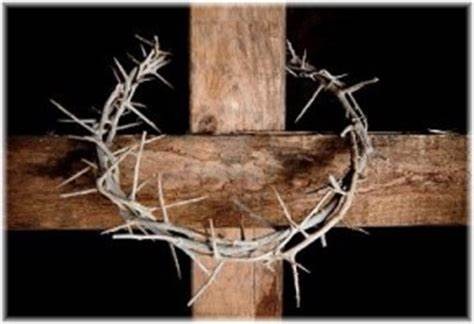
Envisioning this prompted me to think of two other crowns, namely the one worn by our God in heaven, and the crown of thorns worn by Jesus our Savior.

crown of thorns


Those of us living in the U.S. may not often think of God as King because of the way our government is set up. The USA is not governed by a king, but we are, and He is seated on His throne.

Lord Almighty, the God of Israel, enthroned between the cherubim, you alone are God over all the kingdoms of the earth. You have made heaven and earth.” Is. 37:16

“Sing the praises of the Lord, enthroned in Zion; proclaim among the nations what he has done.” Psalm 9:11

As we recognize our sovereign Lord, the King of Kings and Lord of Lords, let us sing unending praises to Him.

Though we have faced, and will continue to face some rough days ahead, will you join me in praying that we can go be radiant nonetheless? I admit, I’ve had some less than radiant moments with whining, ungrateful children. But my desire, and my prayer, is to be radiant in my home and wherever I go (even if that’s significantly limited right now.).

Let me ask you this, what are some ways we can go be radiant this week? I would love your input, so please comment below and share this post with anyone you think might benefit from it.


Living Words

activity board game connection desk
Photo by CQF-Avocat on Pexels.com

When I have a spare moment, I enjoy playing Words With Friends. This modern day electronic version of Scrabble helps keep my brain sharp as I’m challenged to put letters together to not only form a word, but a high scoring word.

The app I use even has a way of testing the strength of the word. It helps me know if there is a higher scoring word out there and I can do better.

The words I put together in Words With Friends are merely for a game, but beyond the game, we know words have so much more meaning, power and impact.

“I know nothing in the world that has as much power as a word. Sometimes I write one, and I look at it until it begins to shine.” Emily Dickinson

Well crafted words are powerful enough to lift up or tear down. They can bring people together or tear them apart. They can incite emotion and action. They can put skin on commitments of the heart, like marriage vows.

Well crafted words are one thing, but my friends, we have something even more powerful. We have the Living Words of God.

In Acts, chapter 7, Stephen is speaking to the Sanhedrin. While giving them quite a good overview of the Old Testament, and highlighting some of the major events and people, he brings up Moses.

As Stephen is recounting Moses’ story, he states, “This is the Moses who told the Israelites, ‘God will raise up for you a prophet like me from your own people.’ He was in the assembly in the wilderness, with the angel who spoke to him on Mount Sinai, and with our ancestors; and he received living words to pass on to us. But our ancestors refused to obey him. Instead, they rejected him and in their hearts turned back to Egypt.” (Acts 7:37-39, emphasis mine)

The idea behind “living words,” or “oracles” here is that of commands or laws of  the Living God.

Barnes notes that “living” or “lively” words here “…stands in opposition to what is dead, or useless, and means what is vigorous, efficacious; and in this place it means that the commands were of such a nature, and given in such circumstances, as to secure attention; to produce obedience; to excite them to act for God – in opposition to laws which would fall powerless, and produce no effect.”

Whew! That was a really, packed-with-lots-of-good-stuff sentence. I want to break it down a bit. Let’s start with the notion that the living words God gave to Moses were “…in opposition to what is dead, or useless…”.

Have you ever felt like someone’s words were dead or useless? Maybe they were “all talk” and no action. Maybe they made promises that they never kept. Maybe they just spewed a whole lot of pointless information. What we see here is such a stark contrast to that idea. God’s living words were so far from that.

In fact, they were just the opposite. They were meant to be “vigorous,” and “efficacious.” That has a healthy, movement kind of feel to it, doesn’t it? The words were to, “secure attention; to produce obedience; to excite them to act for God.”

God wanted the Israelites to be prompted by His living words to live for Him in obedience, in action. Unfortunately they refused to obey and rejected Him (Acts 7:39). In his speech, Stephen told his hearers they were just like their ancestors. “You always resist the Holy Spirit!” (Acts 7:51)

Friends, we have the opportunity, and beautiful duty to submit to the Holy Spirit. We don’t want to be “stiff necked people” who disobey and reject the living words of God. Instead, let’s embrace them, hide them in our hearts and faithfully act on them.

We also have the power to use the words God has given us to share His Truth and encourage others. Do you know someone who is downcast, someone who is weary?

“I would go to the deeps a hundred times to cheer a downcast spirit. It is good for me to have been afflicted, that I might know how to speak a word in season to one that is weary.” – Charles Spurgeon
Just as I work to make every word count in Words With Friends, I want to make the words God has given me count in the lives of others.
In our quest to go be radiant, let us shine in obedience and submission to the living words of God and His Holy Spirit.

Living Bread

close up photo of sliced loaf bread
Photo by Marta Dzedyshko on Pexels.com

Slightly warm, freshly baked, thickly sliced and slathered with butter–that’s my kind of bread. Oh how I love bread. I really do. There is just something so incredibly satisfying about smelling the aroma of it baking and then savoring every bite.

Bread. Whether it’s Naan bread from India, Tortillas from Latin America, or sliced whole wheat in the U.S., bread is a common food around the world. Because of its common nature and use, it makes a globally recognizable analogy.

Jesus, in His great wisdom, used the concept of bread to explain some very important Biblical truths. Contextually, this takes place *after* Jesus feeds the 5,000. Let’s take a look at His words in John, chapter 6 when people are asking what they must do to do the works God requires.

“Jesus Answered, ‘The work of God is this: to believe in the one he has sent.’ So they asked him, ‘What sign then will you give that we may see it and believe you? What will you do? Our ancestors ate the manna in the wilderness; as it is written: ‘He gave them bread from heaven to eat.’

Jesus said to them, ‘Very truly I tell you, it is not Moses who has given you the bread from heaven, but it is my Father who gives you the true bread from heaven. For the bread of God is the bread that comes down from heaven and gives life to the world.’

‘Sir,’ they said, ‘always give us this bread.'” (John 6:28-34) Let’s stop there for just a moment and take note of what’s happening. The people are asking for a sign, though they *just* saw one at the feeding of the 5,000. They still do not believe. And yet, they want the bread, always. It sounds much like the woman at the well, in John 4, who wanted the living water, doesn’t it?

Jesus has moved on from physical bread, like what he fed the multitude, to explaining that the Father gives the “true bread” from heaven. This is the kind of bread that gives life.

Let’s keep reading. “Then Jesus declared, ‘I am the bread of life. Whoever comes to me will never go hungry, and whoever believes in me will never be thirsty. But as I told you, you have seen me and still you do not believe.'” (John 6:35-36)

Now, if the people would believe, there is such a great reward. Let’s pick it up in verse 47, “Very truly I tell you, the one who believes has eternal life. I am the bread of life. Your ancestors ate the manna in the wilderness, yet they died. But here is the bread that comes down from heaven, which anyone may eat and not die. I am the living bread that came down from heaven. Whoever eats this bread will live forever. This bread is my flesh, which I will give for the life of the world.” (John 6:47-51, emphasis mine).

Manna has been referenced a couple of times in this chapter and is used as a comparison to the bread, however there are a couple of important distinctions between the two.

Manna was lifeless and it had to be gathered to be eaten. It was only good for the day. Essentially, it was only useful to provide for one day’s worth of hunger. However, the bread that Jesus is talking about, when eaten (in other words, believed), is not just good for a day’s worth of hunger, but is enough to take care of one eternally.

“Just as the living Father sent me and I live because of the Father, so the one who feeds on me will live because of me. This is the bread that came down from heaven. Your ancestors ate manna and died, but whoever feeds on this bread will live forever.” (John 6:57-58, emphasis mine). If you haven’t seen my post on the Living God, you can check it out here.

Isn’t that incredible?

The manna sent from heaven was a sign of God’s daily sustenance for His people. Jesus, sent from heaven, was a sign of God’s eternal sustenance for His people.

We have a Living Father who sent Living Bread that we might eat of it and spend eternity in His presence.

Friends, the next time you take a bite of bread, whether it’s a scrumptious cinnamon role or a gluten free bun, be reminded of, be grateful for, and be radiant for, the Living Bread who came from heaven for us.

bakery baking bread chocolate
Photo by Pixabay on Pexels.com

Let us go be radiant this week.

You know I love to hear from you. Please leave a comment below.

Living God

snowy pathway surrounded by bare tree
Photo by freestocks.org on Pexels.com

It’s the middle of winter in the Midwest. The tall, dark, barren trees seem utterly lifeless. It’s not hard to assume they are dead because it has been so long since we’ve seen their life-giving green leaves. The snowy, overcast days, add to the overall gloom.

When winters begin to feel long (can you tell this winter is starting to feel long for me?), I think of the joy, beauty and hopefulness of spring. There is really nothing like seeing the tiny buds begin to form on the trees. One is reminded that the leaves and flowers are soon to follow. Bright color and flourishing foliage will indeed return to the outside. Everything will be living again.

“Living” is a word that has caught my eye in Scripture over the last month or so. A couple of passages I was familiar with–ones that speak of “living water” and a “living sacrifice.”  But as I began digging into the Word, I found quite a few more:  living hope, living stone, living way, just to name a few.

There were so many that I thought I might just do a little series on them. In this post, I’m going to focus on our LIVING GOD.

If you look at Deuteronomy 5:26, Joshua 3:10, Psalm 42:2 (and many others), you will find the phrase, “the living God.”

Time and time again in Scripture, we are reminded that the God who created the universe, the God who sent His Son to die for our sins, the God who knows every hair on our heads, is living.

We don’t serve a statue or some created, lifeless object. We know, love and serve a *living* God.

Why do you think it’s so vital to know and understand that our God is a living God?

What would our faith be like if the god we served was a large chunk of carved stone? What would our prayers be like if they were directed toward some, created image of gold? How would we get through the storms of life if our god was just an inanimate object that stared back at us blankly when we cried out to him?

Worshiping that kind of god would be like living in an unending winter.

In contrast, our God is described by one commentator as a God “…who lives in and of himself, and is the author and giver of life to all his creatures, whereby he is distinguished from and is opposed unto the lifeless deities of the Gentiles…”

Worshiping that kind of God is like living in an unending spring. It is truly life-giving.

beautiful bloom blooming blossom
Photo by Pixabay on Pexels.com

“For in him we live and move and have our being…” (Acts 17:28), emphasis mine.

Listen to the deep desire of the Psalmist, “My soul years, even faints, for the courts of the Lord; my heart and my flesh cry out for the living God.” Psalm 84:2

Where there is life, there is hope. There is communion. There is relationship.

Listen to the longing for relationship in this Psalm, “My souls thirsts for God, for the living God. When can I go and meet with God?” (Psalm 42:2)

This same God, spoken of in Psalms, is the One who changed King Darius’ life forever. In Daniel, chapter 6, we read how Daniel was thrown into the lion’s den…and lived. When the king realized that Daniel’s God had saved him, this is how he responded, “I issue a decree that in every part of my kingdom people must fear and reverence the God of Daniel. ‘For he is the living God and he endures forever; his kingdom will not be destroyed, his dominion will never end…'” Emphasis mine.

Doesn’t the eternality of God instill in us an unwavering confidence and a sure hope?

As we take time to meditate on the truth that our God is the living God, may our souls thirst for Him. May our hearts and flesh cry out for Him.

In view of our living God, let us go be radiant this week.


A Crazy Christmas

man with wings standing on brown mountain peak
Photo by Rakicevic Nenad on Pexels.com

An angel appeared to Mary. An angel. That’s what God tells us in the book of Luke. It seems a little crazy, doesn’t it?

The angel proceeds to tell her that she has “found favor with God,” and she’s going to “…conceive and give birth to a son…that he will be called the Son of the Most High.” Not only that, the angel tells her, “The Lord God will give him the throne of his father David, and he will reign over Jacob’s descendants forever; his kingdom will never end.”

What?!?! Can you imagine an angel coming to you and telling you this life-altering, world-changing message? CRAZY, right?

If you keep reading, the crazy continues! The angel goes on to say, “Even Elizabeth your relative is going to have a child in her old age, and she who was said to be unable to conceive is in her sixth month.”

So.Much.To.Take.In.  Mary could have responded in a dozen different, disbelieving ways. But she didn’t. She humbly replied, “I am the Lord’s servant, may your word to me be fulfilled.”

It begs the question, what kind of home did Mary grow up in for her to respond so obediently? What kind of parents and other relatives did she have around her to model the kind of faith she exhibited?

The book of Luke tells us that Elizabeth and Zechariah were “righteous in the sight of God, observing all the Lord’s commands and decrees blamelessly.” Perhaps they had a significant influence on Mary.

Mary “hurried” to go see Elizabeth after the angel had visited her. In the first moments of her visit, during Mary’s greeting to Elizabeth, there was confirmation that what the angel had said to Mary was indeed true. Elizabeth was expecting a baby and asks, “But why am I so favored, that the mother of my Lord should come to me?”

It may have felt crazy to Mary initially, and most certainly surreal, but nonetheless it was all true.

Neither Elizabeth nor Mary were able to choose the names of their sons. No, God had chosen them already. God had determined and decided long ago who these babies were going to be when they grew up. And they were going to change the world forever.

After Jesus was born, an angel appeared to some shepherds. I wonder if for a split second they thought they were going crazy. What on earth were they seeing before them? What must it have looked like to see “the glory of the Lord” that shone around them?

All I know is that they hurried off (just as Mary did when going to see Elizabeth) to see this thing that the Lord had told them about. And when they found precious baby Jesus, it was all confirmed. What they had been told was true.

The shepherds spread the word and “…all who heard it were amazed…But Mary treasured up all these things and pondered them in her heart.”

Mary had the history of the previous 9 months. Everything that likely seemed crazy at first was all unfolding just as she had been told. Everything was true. She was putting together all of the external pieces and internalizing them, pondering them in her heart.

As we look back on that miraculous night, when Jesus was born, I can’t help but think of the lyrics to our modern day song, Silent Night.

Silent night, holy night!

Son of God, love’s pure light

Radiant beams from Thy holy face

With the dawn of redeeming grace

Jesus Lord, at Thy birth

Jesus Lord, at Thy birth

As we ponder the account of the birth of Christ, in some ways it seems so utterly crazy but the confirmation of everything God said, of every prophecy was evident over and over again.

May we have the belief and humility that Mary exhibited and the willingness to do whatever God asks of us, no matter how crazy.

And may we reflect the radiant beams from Jesus’ holy face as we share His love and truth this Christmas.

Merry Christmas my friends!

Grateful for Grace

Grace

I made a mistake. It wasn’t just a little oversight. No, this was a big one. And by big, I mean costly. Very costly.

The mistake was completely unintentional on my part. In fact, I thought I had done everything right. Discovering I had, in fact, not done everything right was the first blow to my ego. My shoulders started to slump as disbelief ran through my brain. The second blow was realizing the dollar figure attached to my mistake. Tears rolled down my cheeks as the harsh reality set in.

My husband is the one who discovered the mistake and after looking things over, realized how I had made it. He tried to take the blame on himself, but I knew it was mine to take.

I dried my tears and distracted myself with taking the kids to the park to play.

When we returned home, I was shocked at what I saw on the dining room table. A dozen long stemmed white roses and a card addressed to me.

I opened the card and out poured a pitcher full of…grace.

My eyes filled with tears again, but this time for a different reason. Saying that I felt completely and utterly unworthy of my husband’s gesture of grace is an understatement. But then again, that is kind of the meaning of grace, isn’t it? Unmerited favor.

He could have responded in so many other ways. He could have gotten angry with me. He could have given me the silent treatment. He could have…but he didn’t. He chose to respond in grace.

My husband’s response was the epitome of the kind of radiance I write about and try to live out.

As we prepare to celebrate Thanksgiving this coming week, I am unmistakably thankful for grace – the grace shown to me by my husband, my friends, my family, and most of all, my Lord and Savior, Jesus Christ.

Amazing grace, how sweet the sound that saved a wretch like me.

In view of the great grace shown to us, let us go be radiant this week as we show that same grace to others.

Wishing you a very blessed and happy Thanksgiving!

By The Light Of The Moon

astronomy ball shaped black crater
Photo by Juhasz Imre on Pexels.com

When is the last time you were outside and looked up to the velvety black night sky at the glowing moon? Even if it’s been a while, you can picture it, can’t you?

It seems as if the Moon is lighting up the night sky, however, that’s not entirely accurate. While reading “Indescribable, 100 Devotions About God & Science,” by Louie Giglio, I was reminded that there is “no such thing as moonlight.”

Giglio eloquently notes, “The Sun gives off light, which means it’s luminous. But the Moon is illuminated, which means it’s lit up by reflecting the Sun’s light.”

The key for this phenomenon to occur is being in the right place. The Moon has to be in just the right place in order to reflect the Sun’s light.

Do you see the analogy I see, my radiant friends? As soon as I read this devotional, I couldn’t help but think of our quest to reflect God’s light in our everyday lives.

We are like the Moon, unable to shine by ourselves, but when in the right place – following Jesus – God’s light bounces off of us and onto others.

In a practical way, what does that look like? Giglio writes, “When you follow Jesus, you reflect His light–His love, goodness, grace, kindness, and power–into the lives of those around you. You shine simply by staying close to Him, the Light of the World!”

John 8:12 “When Jesus spoke again to the people, he said, ‘I am the light of the world. Whoever follows me will never walk in darkness, but will have the light of life.'”

As we think about entering the season of Thanksgiving and Christmas, let us remember to stay close to Him. Let’s not let the all the events on our calendars push away our time with Jesus. Perhaps we could even take a moment to go outside, look up at the night sky and take a good long gander at the Moon.

Every time we see the Moon, may it remind us to stay close to Jesus and reflect His light in our everyday lives. Let us go be radiant this week.

Please share this post with someone who you think might be encouraged by it.