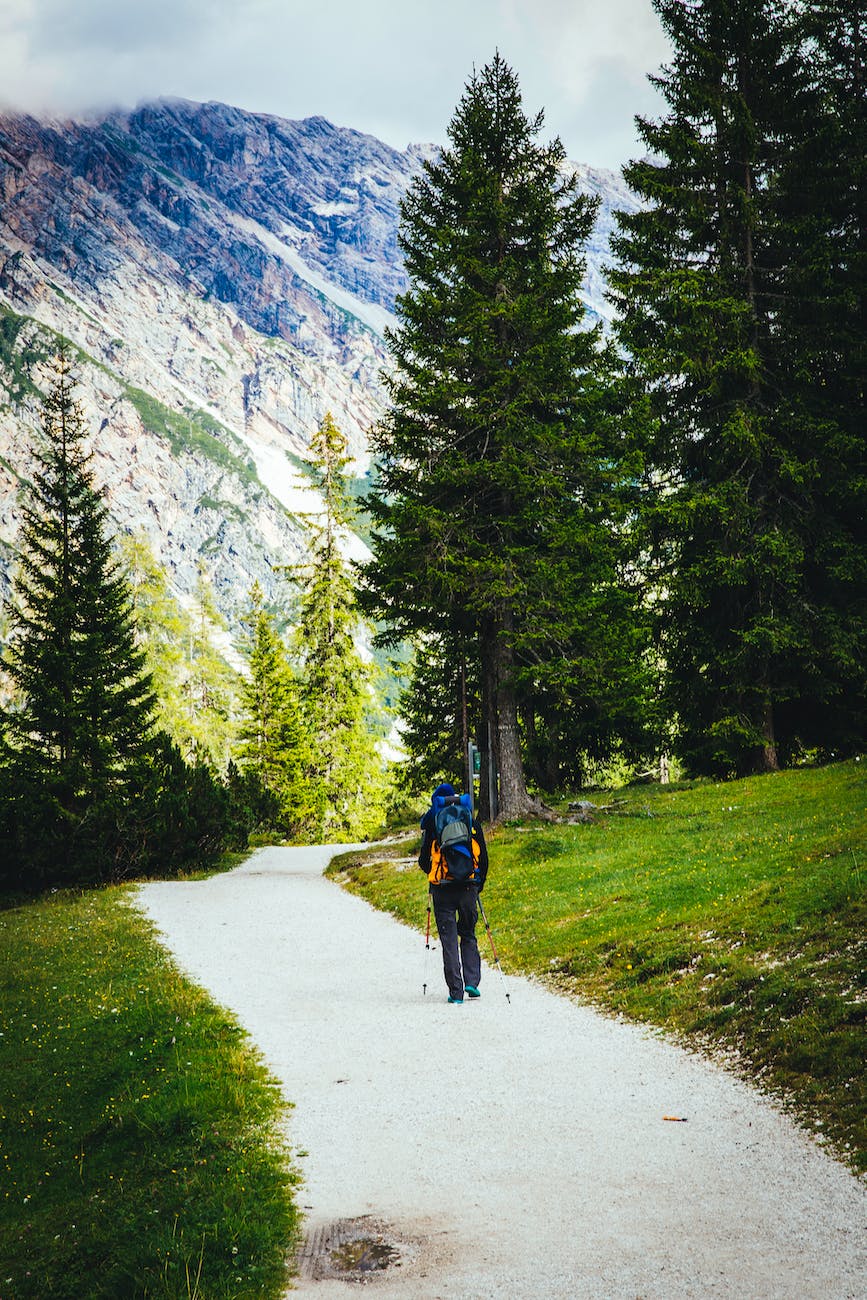
Set My Feet Upon the Rock

Photo by ArtHouse Studio on Pexels.com

Has there ever been a time in your life or that of a loved one when you were in a really difficult situation? Maybe a time when you felt not just down, but down and out? You felt hopeless? Your circumstances were weighing you down to the point where you just couldn’t see beyond them? You couldn’t see a way out? Maybe you were bogged down with fears and worries, anxieties.

We’re going to look at a Psalm written by David that describes that kind of scenario. I find that the Psalms are a helpful and comforting place to go when you are feeling strong emotions and need to be reminded that God understands and that He hears you.

Psalm 40:1-2 reads:

I waited patiently for the Lord;
    he turned to me and heard my cry.
He lifted me out of the slimy (horrible) pit,
    out of the mud and mire;
he set my feet on a rock
    and gave me a firm place to stand.

Barnes notes on the Bible defines a “pit” as “… a cistern; a prison; a dungeon; a grave…It may refer to any calamity – or to trouble…”

When we look at the word describing the pit, “Horrible” – “means ‘noise, uproar, tumult, as of waters; of a crowd of men; of war. Then it seems to be used in the sense of ‘desolation’ or ‘destruction,’ as applicable to the grave.”

If we were to put these ideas together, we could say perhaps that it’s “…a cavern, deep and dark, where the waters roar…” It is also rendered “a lake of misery.” “It is a deep and horrid cavern, where there is no hope of being rescued, or where it would seem that there would be certain destruction.”

Pretty dark imagery, right? Certain destruction doesn’t really invoke feelings of hope, does it?

The bottom of the “pit” is not solid. There is no rock on which to stand. It’s all mud and mire. You can picture it, can’t you? Dark. Thick. Heavy. If you were in that pit, would you feel the unrest of not having anything firm on which to stand?

We see an example of this with the prophet, Jeremiah in Jer. 38:6.

“So they took Jeremiah and put him into the cistern of Malkijah, the king’s son, which was in the courtyard of the guard. They lowered Jeremiah by ropes into the cistern; it had no water in it, only mud, and Jeremiah sank down into the mud.”

In the psalm, David says, “I waited patiently…” which, though difficult, is exactly what God would have us do. However, that doesn’t mean that David was inactive while he waited. He didn’t just slump down, wallow in his misery and surrender. He cried out to the Lord and trusted that the Lord would rescue him.

What was the Lord’s response?

“…he turned to me and heard my cry.” God hears the cries of His people. He hears your cries.

David then describes being lifted out of the thick, miry, mud. Where is he lifted to? A rock.

“…he set my feet on a rock and gave me a firm place to stand.” When you think about a rock, it’s the opposite of mud. It’s solid, strong, stable, secure…just like the Lord.

Photo by Tomas Anunziata on Pexels.com

Ps. 18:2
“The Lord is my rock, my fortress and my deliverer; my God is my rock, in whom I take refuge, my shield and the horn of my salvation, my stronghold.”

Ps. 62:7
My salvation and my honor depend on God; he is my mighty rock, my refuge.

Barnes notes on the Bible elaborate on what took place when the Lord set David’s feet on a rock and gave him a firm place to stand.

“And established my goings – Or, fixed my steps. That is, he enabled me to walk as on solid ground; he conducted me along safely, where there was no danger of descending to the pit again or sinking in the mire.”

So even though it looked like there was no way out, like certain destruction – seemingly hopeless, no possibility of rescue, God stepped in. He lifted the Psalmist out (that’s praise-worthy in and of itself) and then God set his feet on solid ground.

I wonder if we could liken this a bit to a wilderness rescue scenario. Imagine a hiker becomes injured and is unable to get himself out of the mountains. The rescue helicopter comes and lifts him out. There is relief in that alone…but there is more to do. The helicopter gets him to a place where he can heal and move on with his life. Isn’t that what God does for us?

See my blog post, The Path We’re On.

Matthew Henry’s Concise Commentary wraps up our Psalm this way:

“Doubts and fears about the eternal state, are a horrible pit and miry clay, and have been so to many a dear child of God… The psalmist waited patiently; he continued believing, hoping, and praying. This is applicable to Christ. His agony, in the garden and on the cross, was a horrible pit and miry clay. But those that wait patiently for God do not wait in vain.”

Christ is the Rock on which a poor soul can alone stand fast. Where God has given steadfast hope, he expects there should be a steady, regular walk and conduct. God filled the psalmist with joy, as well as peace in believing.”

The next time you find yourself in a “pit”, let me encourage you to wait patiently, remember God knows where you are, He understands, and He hears you. Look to Him, pray to Him. Trust and believe that He has all the power to lift you out and set your feet on the Rock.

With this in mind, let us go be radiant this week.
Lydia, a Woman of Faith

In my recent blog post, The Path We’re On, I wrote about how God:

  • shows us our path, the way we should go,
  • and He lights it up,
  • he GUIDES us,
  • AND He STRAIGHTENS the path before us,
  • we don’t have to be afraid. We can go WHOLE-HEARTEDLY ahead!

We are continuing that idea as we look at a woman named Lydia who needed to take another step on her path – her faith journey.  

The passage we’ll focus on is Acts 16:11-40. Here’s some quick context:

  • Paul, Timothy, Silas and Luke have just arrived in Philippi, a Roman colony and military station.
  • In places where there wasn’t a synagogue, Jews would frequent the riverbanks.
  • They would form “oratories” – which were commonly circular and without a roof and it was there they would pray.
  • So that’s where Paul and his companions went on the Sabbath, and they spoke to the women who had gathered there.
  • The fact that there were only women shows the significant absence of a Jewish population.
  • It’s here we learn about Lydia.

We know a few key things about Lydia. First, she was from the city of Thyatira (which you might recognize as one of the 7 churches addressed in the book of Revelation), and it was famous for its dyeing works, especially for purple or crimson. Second, Lydia was a dealer in purple cloth and third, she was a worshipper of God.

In Acts 16: 14, after Lydia had been listening to Paul and his companions speak, we see something incredible happen but if you blink you might miss it.

“The Lord opened her heart to respond to Paul’s message.”

Now wait, wasn’t she already a worshipper of God? Yes! Here’s how one commentator explained it:

“She had left the heathenish idolatry and owned the one and only and true God but as yet was unacquainted with the Gospel…” Matthew Poole

Lydia had turned to God, but she still needed to take another step – there was still more she needed to know and do in her faith journey.

TAKE AWAY #1 – Pray the Lord would help you take the next step in your spiritual life.

You see, it was THE LORD who opened her heart to respond to Paul’s message. Paul’s job was to preach; the LORD’s job is to open hearts.

What does it mean that the Lord “opened her heart”?

            “Her understanding was enlightened, her heart changed, she now loved what she before hated, and hated what she before loved.” Matthew Poole

Some would say that it means that the Lord opened her understanding and her will and that it corresponds to the Holy Spirit (cf. Lk. 24:45) and Lydia responded (or gave heed to). How did she respond? By getting baptized.

Apparently, she was baptized without delay and likely right there in the river where the Jews went to pray (it was usual to be baptized immediately on believing) – cf Acts 2:41, 8:31).

Not only that, she wasn’t the only one getting baptized, it was her whole household! There is no specific mention of a husband or children – it could be that her household or “family” meant female slaves and freed women she employed.

What happens after her baptism?

Lydia invites Paul and his companions to stay with her at her home. Here we see a few things:

  • Her large-hearted hospitality implies a certain measure of wealth, as does her occupation, which required considerable capital.
  • She appealed to the fact that they had recognized her faith by admitting her to baptism. If she was fit for that, was she unfit to host them in her home?
  • She also probably wanted further instruction in the doctrines of religion.
  • “Religion does not call us from our business in the world, but directs us in it.” Matthew Poole.

TAKE AWAY #2 – INVITE GODLY TEACHING INTO YOUR HOME

Even though she had just taken the next step in her faith, she didn’t want it to stop there. She wanted more. Oh, to be like Lydia in our spiritual lives – that we may always want more.

Paul and his companions agreed to stay at her home.

Remember from The Path We’re On, when you ask God to broaden your understanding, He will. Likewise in the book of James, when you ask God for wisdom and believe that He will give it to you, He does! Couldn’t we also then say that when you ask God to bring you Godly teaching and instruction, He will?

In the text, we take a little break from Lydia and have another situation that takes place before we see her again.

Here are some highlights in Acts 16:16-40:

  1. I kind of chuckle that Paul got annoyed.
  2. It gets serious though when Paul and Silas are stripped, beaten and thrown into prison.
  3. You might think, oh no, that’s terrible, especially after such a wonderful time seeing growth in the life of Lydia and her household. However, Paul and Silas don’t see it that way. They are praying and singing in the middle of the night in prison.
  4. There’s a violent earthquake that releases everyone’s chains. (AMEN!)
  5. Skip down to v. 29 and the jailer wants to know what he must do to be saved.
  6. “Believe in the Lord Jesus and you will be saved – you and your household.”
  7. They spoke the word of the Lord to him and all others in his house…”
  8. The jailer took them and washed their wounds (maybe at the river?); then immediately he and all his household were baptized (maybe at the river?)
  9. Then they get released and go back to Lydia’s house where they MET WITH THE BROTHERS AND SISTERS AND ENCOURAGED THEM…”

The ones who had just suffered for their faith came and encouraged Lydia and those who met at her house? We’ll come back to that.

Lydia’s house appears to have been the meeting place (the church).

Who were the brothers and sisters? Probably some of the ones who were baptized by Paul. They are also the ones who later supported Paul by sending money, twice, when he was in Thessalonica and when he was in prison in Rome.

How do you think Paul and Silas encouraged them? Here are what some commentators say:

  • “They exhorted them and encouraged them to persevere, notwithstanding the opposition and persecution which they might meet with.” (Barnes)
  • “…by telling them what God had done both FOR them and BY them in prison.”
  • “…exhorted them to prepare for suffering, and to submit unto God in it, and to make a holy use of it.” Matthew Poole.

TAKE AWAY #3

As you keep taking those steps God wants you to take, it may lead you to suffering – but BE ENCOURAGED, WATCHING TO SEE HOW GOD WILL USE IT.

Remember we can trust God and forge whole-heartedly ahead – taking those steps of faith that He wants us to take. Can I encourage you to spend time in prayer this week, asking God to make known or make clear to you, the next steps He wants you to take?

Let us go be radiant as we take those next steps of faith.

I always appreciate hearing from readers. Please leave a comment and/or a like. Share Goberadiant.com with others.

The Path We’re On

Photo by Markus Spiske on Pexels.com

When I worked in Costa Rica, my team and I would often host groups. During their stay, we’d take them to a rural area to a steep hiking trail with some rustic steps.

Those of you who know me well know that I’m not a huge fan of hiking. Why, then, would I take people on difficult hike? Because of what awaited us at the bottom of the trail…a huge, fast flowing, heart pounding, awe-inspiring waterfall.

The waterfall empties into a large pool of water surrounded by rocks. Not only is it a sight to behold, it’s a place where people can swim and feel the force of the falling water.

It such a beautiful place that it makes the hike down (and back up) the path worth it.

The idea of a path is such a great analogy to our lives, isn’t it? It represents the different directions we’ve taken and will take over the years based on our decisions and circumstances. It’s full of symbolism as we imagine it being smooth or rough, straight, or crooked, well-lit, or dark.

As you think back on your life, you might observe that some of the things on your path are the result of things that God did and some of the things are a result of decisions you made.

The Bible talks quite a bit about different “paths,” sometimes translated “ways,” and the more I studied the topic, the more I saw a pattern – God’s part and our part.

Our part

Like the Psalmist, we ask God to show us His ways and teach us His paths.

“Show me your ways, Lord, teach me your paths”. Ps. 25:4

“Direct me in the path of your commands, for there I find delight”. Ps. 119:35

We don’t always know what those next steps are in our life, so we ask God to show us.

God’s part

He makes known and gives understanding.

“You make known to me the path of life; you will fill me with joy in your presence,
with eternal pleasures at your right hand”. Ps. 16:11

“I run in the path of your commands, for you have broadened my understanding”. Ps. 119:32

When we ask God to show us and teach us, He does.

What else does God do?

He LIGHTS our path.

          “Your word is a lamp for my feet, a light on my path”. Ps. 119:105

  • How does God light our path? By HIS WORD. His word is what illuminates the way before us.
  • As we spend time in His Word, we will know the way we ought to go. It’s not about what the WORLD says, it’s about what His WORD says.
  • When I worked in Costa Rica, we never took people to the waterfall at night, and you can imagine why. It was pitch black. There would be no way to see or safely make our way down the rock and dirt laden path.

What is our part/our response to a lighted path?

We walk on and stick to the path on which we know we ought to go.

  • “My steps have held to your paths; my feet have not stumbled”. Ps. 17:5
  • “The path of the righteous is like the morning sun, shining ever brighter till the full light of day”. Prov. 4:18

That’s the path of the righteous. Do you want to be on that path? I do! How do we do that? How do we keep our way pure?

  • Ps. 119:9  “How can a young person stay on the path of purity? By living according to your word.”

What else does God do? What’s His part?

He does the Guiding and the Leading

  • Why? Because He knows the way – just like in Costa Rica, we, who lived there, led the team to the path toward the waterfall.
  • He has done the leading for a very long time.
  • Neh. 9:19 reminds us how God led the Israelites:  “Because of your great compassion you did not abandon them in the wilderness. By day the pillar of cloud did not fail to guide them on their path, nor the pillar of fire by night to shine on the way they were to take.”
  • We see something similar in the New Testament in Luke 1: 76-79 in Zechariah’s prophecy about his son, John the Baptist which reveals:

And you, my child, will be called a prophet of the Most High;
    for you will go on before the Lord to prepare the way for him,
77 to give his people the knowledge of salvation
    through the forgiveness of their sins,
78 because of the tender mercy of our God,
    by which the rising sun will come to us from heaven
79 to shine on those living in darkness
    and in the shadow of death,
to guide our feet into the path of peace.”

Barnes Notes on the Bible gives us some insight on the cultural, historical context to help us see the meaning of “to guide our feet”:

“The figure in these verses is taken from travelers, who, being overtaken by night, know not what to do, and who wait patiently for the morning light, that they may know which way to go…. So (man) sat in the shadow of death. So he knew not which way to go until the Sun of righteousness arose, and then the light shone brightly on his way, and the road was open to the promised land of rest – to heaven.”

Barnes Notes on the bible
  • Are you familiar with the song, Same God?  The same God who led the Israelites out of Egypt and in the wilderness, is the same God who leads us today. He gives us direction. He guides our steps, just like He did in Biblical times.

I think we know that in our minds, but do we practice that as we make decisions? Do we seek His will, direction, and guidance? And do we wait for it before we act?

You know what else God does?

He Straightens our Path.

  • Prov. 3:5-6

“Trust in the Lord with all your heart and lean not on your own understanding;
in all your ways submit to him, and he will make your paths straight“.[a]

The Psalmist asks God in Ps 27 to lead him in a straight path. If you’ve ever been hiking or on a winding trail, you know how daunting it can be. You can’t see what’s ahead, what obstacles there might be, what the terrain is like…

But when you have a straight path, you can see far beyond your location. You know what’s coming – you have a clear path before you.

The caution is to stay on that straight path. Prov. 2

My son, if you accept my words
    and store up my commands within you,
turning your ear to wisdom
    and applying your heart to understanding—
indeed, if you call out for insight
    and cry aloud for understanding,
and if you look for it as for silver
    and search for it as for hidden treasure,
then you will understand the fear of the Lord
    and find the knowledge of God.
For the Lord gives wisdom;
    from his mouth come knowledge and understanding.
He holds success in store for the upright,
    he is a shield to those whose walk is blameless,
for he guards the course of the just
    and protects the way of his faithful ones.

Then you will understand what is right and just
    and fair—every good path.
10 For wisdom will enter your heart,
    and knowledge will be pleasant to your soul.
11 Discretion will protect you,
    and understanding will guard you.

12 Wisdom will save you from the ways of wicked men,
    from men whose words are perverse,
13 who have left the straight paths
    to walk in dark ways,
14 who delight in doing wrong
    and rejoice in the perverseness of evil,
15 whose paths are crooked
    and who are devious in their ways.

Those who have left the “straight paths” have made choices to do that.

The choices we make determine the paths we take.

What is our response to God as He straightens our path? What is our part?

Let’s CHOOSE TO TRUST AND RUN!

Photo by Tirachard Kumtanom on Pexels.com
  • Run? Yes!  We get on our running shoes.
  • Ps. 119: 32, “I run in the path of your commands,
        for you have broadened my understanding.”
  • We trust God so much that when He:
    • shows us our path, the way we should go,
    • and He lights it up,
    • he GUIDES us,
    • AND He STRAIGHTENS the path before us,
  • we don’t have to be afraid. We can go WHOLE-HEARTEDLY ahead!

Maybe that means boldly sharing your faith with your neighbor, or praying for something bigger than you’ve ever prayed for before, or stepping up to serve in a way you know God has called you…

Now I’m not saying your path won’t have challenges at times. I’m not saying it will be easy or smooth all the time. But remember why I endured a rough hike in Costa Rica. It was all about that amazing waterfall that awaited me at the end.

Remember what awaits you at the end of your path – eternal life with our God – it’s worth it.

Let us go be radiant on our path this week!