Hi, I’m Suzie Inglis. Welcome to my blog! I created Go Be Radiant to share Biblical truth along with personal stories of struggles and successes for the purpose of discovering how we, as Christ-followers, can be radiant (reflecting God’s light) in our everyday lives. Here’s a brief bio on me, followed by a glimpse into … Read more About
Are you looking for a speaker for a women’s retreat, conference or other gathering? I have been speaking publicly for over 25 years. It has been a joy for me to speak both in the U.S. and throughout Latin America. I have spoken at women’s and youth retreats, missions’ conferences, leadership events and within local … Read more Speaking Engagements
I would love to hear from you! Do you want to chat about one of my posts? Or maybe you have an idea or suggestion for a future post. If so, please feel free to reach out to me. I really appreciate hearing how God is working. Just fill out the simple form below and … Read more Contact
My kids had a lemonade stand over the summer and wanted to use the money they received (from very generous neighbors) to buy a basketball hoop.
I searched high and low for a good deal and found a previously owned hoop that wouldn’t exceed their budget. My husband was happy to go and retrieve it, hoisting it in the back of his truck.
When he got home, we had a few challenges. First, we had to get this long, and quite large basketball hoop out of the truck. Second, we needed to figure out how to get the very, very heavy base out without dropping it. Third, we needed to set the pole upright on that very, very heavy base and secure it.
My husband thought through a plan and step by step, we were able to carefully get the pole, attached backboard and basket (all in one piece) out of the truck and onto the grass. Then he grabbed a dolly from the garage and placed it like a ramp off the tailgate of the truck. Setting some heavy objects at the bottom of the dolly to hold it in place, we worked together to pull the gravel-filled base from the truck bed onto the dolly.
Once the base was in place on our driveway, we (meaning my husband) 😉 had to lift the pole and position it into the base. While he held it in place, I had to insert and properly line up the bolts. This sounds significantly easier than it actually was. Let’s just say we had to try it from a different direction after our first attempts failed.
Finally, we got everything in place and secured. Phew!
I said to my husband, “I am amazed at what you can do. I never could have done that.” He replied, “You just did.” I responded, “Only with your direction and strength.”
And then it hit me. Isn’t that how it is with God? He gives us a really big, or difficult task and we think, “no, I can’t do that.” Remember Moses?
But with God’s direction and strength, can’t we do anything He wants us to do? I believe we can.
When God asks us to do something, let’s not focus on the greatness of the task, but rather on the greatness of our God.
Now, every time we shoot hoops on the driveway, I have a visual reminder of how God works in us using His direction and strength. Next time you see a basketball hoop, maybe God will bring that to mind.
We are going to continue walking through Psalm 23, through green pastures, beside still waters and other terrain as we pick up where we left off last time.
He guides me along the right paths for his name’s sake.
“The greatest single safeguard which a shepherd has in handling his flock is to keep them on the move.”(Phillip Keller, A Shepherd Looks At Psalm 23.) He continually guides them throughout different seasons of the year so that they have the pastures and other things they need.
If he’s a good shepherd, he knows his terrain. He knows both the advantages and drawbacks of it. This means he knows where it’s safe for the sheep, where the will do well and flourish and where it will there isn’t much feed.
The shepherd acts accordingly by leading the sheep to places where there is plentiful fresh feed for them. “As they (the sheep) go through the gate even the staid old ewes will often kick up their heels and lap with delight at the prospect of finding fresh feed. How they enjoy being led onto new ground.”(Phillip Keller, A Shepherd Looks At Psalm 23.)
I had to chuckle when I read that. It reminded me of the ladies at my church when we are gathered together for our Christmas Tea and the desserts are plentiful. The excitement is palpable as the women prepare to partake of the chocolate fountain and other delectable delights. Perhaps we are a little more like sheep than we care to admit. 😊
As we observe how a shepherd leads his sheep, we can be sure a good one leads them sheep along life-giving paths.
We, however, sometimes doubt or even question the path that God has us on, don’t we? Our doubt may creep in when we are walking through “dark valleys” in our lives. We may not understand why God is having us take that route.
4 Even though I walk through the darkest valley,[a] I will fear no evil,for you are with me;
Surprisingly, valleys were the best possible way for the sheep to get to higher terrain where the shepherd wanted them to go. Why? First,they provide the gentlest grades up the mountain. That means the sheep weren’t headed straight up a steep mountainside. Second, valleys have water along the way, which the sheep needed. Third, valleys generally have the choicest meadows from which to graze.
“Our Shepherd… knows where we can find strength and sustenance and gentle grazing despite every threat of disaster around us.” (Phillip Keller, A Shepherd Looks At Psalm 23.)
We have to remember that the psalm says I walk “through” the darkest valley, it doesn’t say I stop or die there.
Sometimes we walk through dark seasons of life, like the sheep going through a valley with tall cliffs on either side – where the sun may only reach their path a couple of hours a day, if that.
The next time you walk through a dark valley, or if you are walking through one now, remember this Psalm. Remember that the Shepherd knows the terrain Remember that He is with you. The valleys have water – which is found in him (think of the woman at the well). He will sustain you.
Your rod and your staff, they comfort me.
A shepherd’s rod is like an extension of his arm. “It stood as a symbol of his strength, his power, his authority in any serious situation.” (Phillip Keller, A Shepherd Looks At Psalm 23.)
The rod was used to fight off danger. It was also used for discipline. When a sheep starts to wander where it shouldn’t, the shepherd skillfully throws it near the sheep to encourage it to scurry back to the flock. In a similar way, God’s Word keeps us from sin.
The rod was used to count and inspect the sheep. The shepherd would take great care and closely examine each sheep, looking for wounds, insects and other things that might harm the sheep.
“This is what was meant in Psalm 139:23-24 when the psalmist wrote, ‘Search me, O God, and know my heart; try me, and know my thoughts; and see if there be any wicked way in me, and lead me in the way everlasting.” (Phillip Keller, A Shepherd Looks At Psalm 23.)
He renews our minds – where a lot of potential damage starts.
The staff is “…normally a long, slender stick, often with a hook or a crook on one end.” (Phillip Keller, A Shepherd Looks At Psalm 23.)
A shepherd will use it to draw the sheep close to Himself and newborns who’ve been separated from their mother to them.
It’s used for guiding the sheep by using the long tip of it to gently go alongside the sheep and apply pressure to guide it where the Shepherd wants it to go – through a gate or a narrow passageway. This reassures the sheep of its proper path.
It makes me think of how God guides us in our lives – we might say “closing doors,” or even saying “no” to things, but using that to guide us where He wants us to go.
The shepherd will also hold his staff against the side of some sheep (like one who is a special pet or a favorite) as they walk together. It’s like walking hand in hand and the sheep enjoy the special attention.
The staff could be considered symbolic of the Holy Spirit – guiding us.
You prepare a table before me
As the shepherd guided the sheep, he would lead them to the high mountain country, otherwise known as the “table lands.”
The shepherd had to take scouting trips there to see how best to use the area for the sheep and ready it for their arrival. He had to distribute salt and minerals in strategic locations for the sheep. He had to find where any poisonous weeds were in order to keep the sheep away from them or get rid of them.
In our Christian life, even though Christ has gone before us and prepared the “table lands,” it doesn’t mean we won’t have problems there. There is still potential for attack. But we remember that our Shepherd is with us, that He knows us and cares for us.
You anoint my head with oil, my cup overflows
In the beginning, I mentioned that this poem takes us through a year in the life of a sheep. Well, summertime for sheep is “fly time”
The Shepherd must pay extremely close attention to the behavior of the sheep which, at the onset of flies, would show aggravation, irritability, and restlessness. The shepherd then would apply a protective coating, like a balm, over the sheep’s nose and head. This process had to be done repeatedly. Each time, there was an immediate change in the sheep’s behavior, and they would start to feed quietly again and lie down, contented.
If we liken this idea to our Christian life, we might say that we too need a “continuous anointing of God’s gracious Spirit to counteract the ever-present aggravations” we encounter.
My cup overflows
At the end of summer, the autumn days approach. The sheep have a reprieve from the flies. “No other season finds them so fit and well and strong. *Remember, there’s nothing that makes the Shepherd happier. No wonder David wrote, ‘My cup runneth over.’” (Phillip Keller, A Shepherd Looks At Psalm 23.)
Another aspect to the meaning of the “cup” is that of suffering, as Jesus referred to his suffering in the Garden and at Calvary as his “cup”
When brutally cold weather comes and the sheep are freezing, Phillip Keller would be there with them, in their distress and to remedy it, would share a mixture of brandy and water with the sheep. He’d give them a few spoon-fulls and it would warm them right up. He believes the shepherds in David’s day would have shared their wine “with their chilled and frozen sheep.”
“What a picture of my Master, sharing the wine, the very life blood of His own suffering from His overflowing cup, poured out at Calvary for me. He is there with me in every storm.”
Phillip Keller, A Shepherd looks at psalm 23
Surely goodness and mercy will follow me all the days of my life
“Surely goodness and mercy — That is, God’s favour, and the blessed and comfortable effects of it; shall follow me — Hebrew, ירדפוני, jirdepuni, shall pursue me ... (Benson)
David was used to being pursued by enemies but here, he contrasts that with being pursued by God’s goodness and mercy – which pursue us too. Isn’t that amazing? And that pursuit lasts all the days of our lives. And what happens after that?
And I will dwell in the house of the Lord forever.
David recognizes that God’s goodness and mercy will be with him until the end of his life on this earth and even beyond into eternity. (Adapted from Benson)
The idea of the last line of the poem is a “longing of the soul for a sense of the continual presence of God, and a realization of constant communion with him.” (Pulpit Commentary).
May that be our longing too – to sense the presence of God continually and have communion with Him.
We are a forgetful people. To help us remember the truths of this Psalm, I wear a bracelet I made (with the help of some friends) that has different colored silicone beads. Each color represents a different section of the Psalm. Every time I wear it, I’m reminded of our Good Shepherd’s undeniable care for us through various terrain and in all the seasons of life.
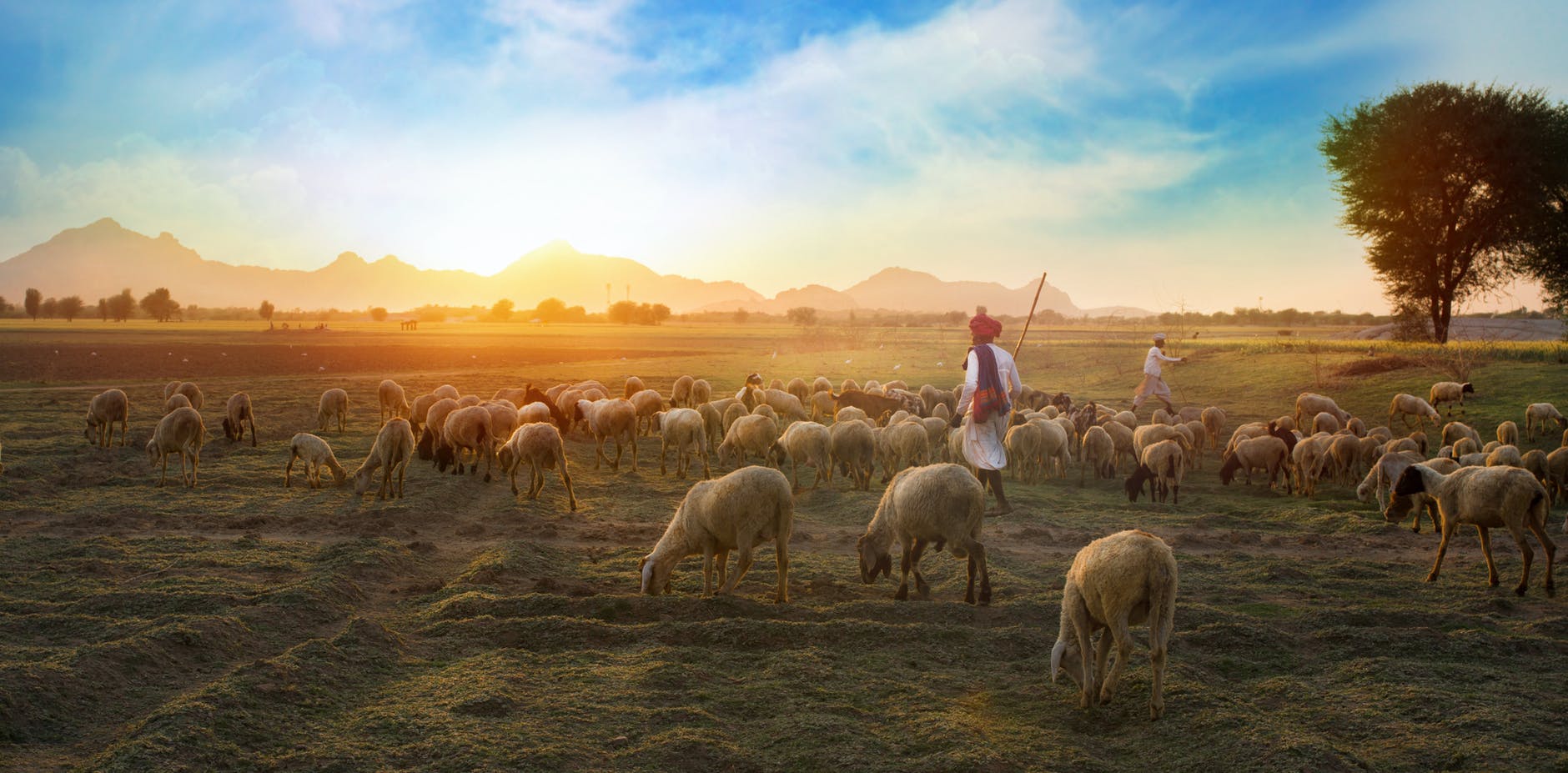
In the first of this two-part blogpost, we’ll begin walking through a beautiful psalm, written from the perspective of a sheep by a shepherd named David. The Psalm recounts various events that take place throughout a year in a sheep’s life. We start at “home” with the shepherd, go “out into the green pastures, along still waters, up through the mountain valleys to the high tablelands of summer.” (Phillip Keller, A Shepherd Looks At Psalm 23)
As we go through each section of the poem, notice how the Shepherd painstakingly cares for the sheep in each of the seasons throughout the year.
1 The Lord is my shepherd, I lack nothing.
David begins by establishing a relationship whereby the LORD is the caretaker, the one in charge of the well-being of the sheep. Since He is the Shepherd, the sheep want nothing. The word ‘want’ as used here, goes beyond not lacking, it is “…also the idea of being utterly contented in the Good Shepherd’s care and consequently not craving or desiring anything more.” (Phillip Keller, A Shepherd Looks At Psalm 23)
That kind of contentment is such a drastic contrast from the marketing in our culture of “you need more, want more, have more, be more”. Is there an area of your life where you aren’t feeling contented? Where do you think you “lack” but you don’t really?
The Good Shepherd “…is the owner who delights in His flock. For Him there is no greater reward, no deeper satisfaction, than that of seeing His sheep contented, well fed, safe and flourishing under His care. This is indeed His very ‘life.’ He gives all He has to it. He literally lays Himself out for those who are His.” (Phillip Keller, A Shepherd Looks At Psalm 23)
2 He makes me lie down in green pastures, he leads me beside quiet waters…
Sheep have to be free of 4 things in order to lie down:
Fear
Friction with others of their kind
Pests (flies, parasites)
Hunger
I would venture to say, it’s similar for us. When we lay down at night, what is it that keeps us awake? Fears we have, friction or conflict with others, the occasional fly or mosquito, hunger – maybe not physical hunger – maybe we’re hungering for something and we don’t know how to satiate it.
When it comes to the four things the sheep need to be free of in order to lay down, there is only one who can free them of their anxieties: the Shepherd.
It is His presence that provides reassurance. “In the Christian’s life there is no substitute for the keen awareness that my Shepherd is nearby. There is nothing like Christ’s presence to dispel the fear, the panic, the terror of the unknown…” (Phillip Keller, A Shepherd Looks At Psalm 23)
When free of fear, friction, pests and hunger, the sheep could peacefully lie down in green pastures.
Green pastures did not happen by chance, but rather by tremendous labor. Shepherds would have to clear rough, rocky land, prepare soil, plant special grains, and make sure it was watered. What incredible care on the part of the Shepherd.
Quiet Waters – When sheep are thirsty, they get restless and go searching for any water they can find, even if it’s in a polluted pothole, where they end up getting parasites or other germs.
Sheep had various sources of water, including deep wells, springs and streams, but one of their sources of water surprised me a bit. Close your eyes for a moment and picture being outside very early in the morning, so early, the sun has not yet risen above the horizon. You’re in the middle of a lush, grassy meadow. You look down and what do you see on the blades of grass?
Droplets of dew! How would you describe those droplets of dew?
Small but plentiful
Clean
Pure
How often is dew “delivered”? It’s delivered each morning, kind of like mana was “delivered” for the Israelites in the desert.
Sheep will arise very early in the morning and start to feed, and they can “keep fit” from the water droplets of dew found on the grass.
Think about how you “keep fit” spiritually. You likely do so by daily feeding on God’s Word, maybe in those early, quiet hours of the morning.
He refreshes/restores my soul
A sheep can end up on it’s back and when that happens, it cannot get up. It’s a “cast” sheep. Its feet are in the air, it’s struggling, it’s frantic. It becomes susceptible to predators.
When the shepherd finds the sheep, he carefully turns it on its side, massages its legs for circulation and finally the sheep is able to stand up – RESTORED.
Think about a time when you were in a state like that – where you were really struggling and you were down – not able to get upright, but God gently and carefully restored you.
If you’re struggling right now, I pray that our Good Shepherd would restore your soul.
We’ll continue walking through this Psalm in my next post. In the meantime, can I challenge and encourage you to read through the whole Psalm each day this week and allow the Holy Spirit to bring to remembrance how the Shepherd cares for the sheep?
As we reflect on the Shepherd’s painstaking care for His sheep, let us go be radiant this week.
We have a bird feeder hanging just outside of our kitchen window that attracts many of our neighborhood sparrows, cardinals and finches. Typically, when a bird approaches to eat and sees me standing on the other side of the window, he quickly flees. Every now and then, I can catch a glimpse of these beauties eating their breakfast without them realizing I’m there.
One morning, there was a bird who swooped down toward the feeder and began pecking at the seeds in the dish. Despite seeing me, he stayed and continued to eat. It caused me to pause for a moment, as this was unusual. I had the thought that he must be really hungry. He was so concerned about satisfying his hunger, that it became his focus, even though he was aware of my presence. His hunger was greater than his fear.
When the bird chose to stay and feed, instead of flying away worried, it reminded me of Martha and Mary in Luke 10:38-42. Martha was “worried and upset about many things,” while Mary sat at Jesus’ feet, listening to what He said – feeding, if you will.
In our world today, it’s easy to allow our fears and worries to keep us away from feeding on the words of Jesus. It’s kind of ironic really.
Our fears and worries keep us away from the Word, but the Word is that which keeps away our fears and worries.
Suzie Inglis
John 6:35 reminds us who Jesus is:
Then Jesus declared, “I am the breadoflife. Whoever comes to me will never go hungry, and whoever believes in me will never be thirsty.
As I think about how we can go be radiant this week, I can think of no better way than spending time nourishing ourselves in the Word. Let us go to Jesus, feed on TRUTH and remember in whom we believe.
May our hunger for Jesus always be greater than our fears.
Shortly before school ended for the summer, I was standing on the playground with a fellow mom. Our kids had become friends and we struck up a conversation while they played.
I mentioned to her that my son prayed for her son every day. She said that her oldest recently told her how he had prayed for something, which she thought was sweet, especially since she doesn’t really pray.
I paused momentarily. We were standing there together, at a Christian school, where she had sent two of her kids, but she didn’t pray? I was so deeply saddened at the thought of trying to do life without prayer.
It was almost unimaginable to me because prayer is such an integral part of my life. I would think that there would be either a strong sense of self-reliance or a strong sense of hopelessness without prayer.
Though my youngest doesn’t always want to pray, I gently encourage him to do so. One morning, he prayed for me and he prayed that I would have a good day at school. It was an incredibly powerful prayer because of what it made me realize.
I don’t go to school. However, I realized that he prayed I would have a good day at school because he has heard me pray that for him. He was repeating what he was hearing! Why is that so powerful? Because it proves he is actually listening! 😊
Many times, I wonder if my kids really do hear me. My little guy’s prayer proved that he does (at least at times). This realization inspired me to pray more often, out loud, for my children, so they hear me.
Whether we are parents, grandparents, aunts, uncles, or mentors, we have such a precious opportunity to model a life of prayer for those around us. Let us pray, and pray often, and out loud, for the younger generation.
Do you know what this will do? It will teach them to pray. It will show them how. Do you remember when the disciples asked Jesus how to pray? That’s where we see the Lord’s Prayer in Scripture.
It will be one more way to demonstrate love to them. It will show them that you put your faith and hope in God, not in yourself. It will help develop a life-changing habit in their lives. It will help connect them to God.
As I think about that mom on the playground, I not only lift up her son in prayer, I pray for the whole family.
As we pray today and, in the days to come, may we also lift up the families who lost their loved ones, including many children, in the horrible school shooting in Texas. Life is so very short. Let us pray without ceasing as the Bible instructs.
We serve a big God, the only true God, and if we ask anything according to His will, He hears us.
May He hear from us a lot and may He hear a lot of us. Let us go be radiant this week.
Maybe you’ve had a time in your life when you sensed God telling you to do something, but you felt reluctant because you didn’t think you had what you needed to accomplish what He wanted you to do.
Moses (read Exodus 3 and 4 for context) is a prime example of such a scenario. God had a mission for him: “So now go. I am sending you to Pharaoh to bring my people the Israelites out of Egypt.” (Ex. 3:10). What was Moses’ reply in the following verse? “Who am I that I should go to Pharoah and bring the Israelites out of Egypt?” As the story continues, Moses comes up with potential problems and other reasons why he doesn’t have what it takes to accomplish God’s mission.
Let’s fast forward to a time when Jesus had a mission for the twelve disciples he had been training. He was going to send them out to preach to the lost sheep of Israel. In Matthew 10:1, we read that the disciples were given authority to “drive out impure spirits and to heal every disease and sickness.” However, in vs. 9-10, we read that they were not to take the following: any gold or silver or copper (money/coins), a bag for the journey, an extra shirt, sandals or a staff.
Essentially, the disciples were given a mission and were to take next to nothing when they went. I don’t know about you, but reading that makes me a bit uncomfortable. I always have stuff with me. And I mean always! I want to be prepared for any and every situation. There is security and comfort when we have things with us, right?
So why did Jesus instruct the disciples not to take any of those things on their first mission? One commentator writes, “that they might be always unencumbered, free, ready for motion.”
Benson Commentary
I love that. It reminds me of David, when he was preparing to fight Goliath and he was given armor to wear that was way too cumbersome and heavy for him. There was no way he could fight Goliath being weighed down like that. He didn’t need that. No, he just gathered 5 small stones and used a light-weight slingshot (next to nothing compared to a full suit of armor) and it did the job.
What would do the job for the disciples as they went out per Jesus’ instruction? Wouldn’t they need something to defend themselves? I mean, Jesus warned them of the opposition they would encounter. But He also told them not to take a rod to defend themselves. I might have felt a little nervous about that.
Why wouldn’t He want them to have a rod? Perhaps “…because being the servants of the Lord, they were to be defended by his power as well as supported by his bounty.”
Benson commentary
They didn’t even have to worry about what words they would say when they were arrested. Matthew 10:19-20 says, “But when they arrest you, do not worry about what to say or how to say it. At that time you will be given what to say, for it will not be you speaking, but the spirit of your Father speaking through you.” God would even provide the words they needed! He provides everything we need to accomplish what He has called us to do.
Remember the feeding of the 5,000? How many loaves of bread and fish were there? It was next to nothing, right? The disciples knew it wasn’t nearly enough to feed everyone. And yet, astoundingly, there was an abundance of food.
God has a pattern of using little to accomplish much – from next to nothing to astoundingly abundant. Perhaps it’s to remind us that He is always with us—that He, alone, is enough. Perhaps it’s to help us exercise our faith and dependence on Him. Perhaps it’s to help us focus on Him and what He wants us to do.
My encouragement to you, in a world where the enemy sends messages like, “you’re not enough” and “you don’t have enough,” remember that God is with us and when we are with Him, we have everything we need, often in abundance, to accomplish His will.
Let us be faithfully obedient to His call and let us be radiant this week.
If you thought of other examples in Scripture like the ones I gave above, please comment below. I love hearing from my readers. Please also pass this along to anyone God brought to mind while you were reading this post.
Please follow me to be updated every time I post. Thank you!
“Never feel sorry for raising dragon slayers in a time when there are actual dragons.” Dr. Georgia Purdy, of Answers in Genesis, made this statement at a conference I recently attended, and it left me feeling both daunted and inspired.
Whenever I think of dragons, I envision a time long, long ago, far removed from modern day. However, the more I see and hear about the atrocities taking place around the globe, I’m reminded that we are in a battle. As much as I like to think that my simple life with my husband and kiddos in the suburbs is just that, there is, in actuality, a battle taking place and I/we need to be prepared and proactive.
One of the biggest battles we are facing is the battle for Truth. We live in a postmodern world that has come to believe, ironically, that there is no absolute Truth. It’s all about “your truth.” Somehow, the concept of “truth” has been replaced with what we formally called, “opinions.” Sadly, now the two words appear to be synonymous. This detrimental way of thinking leads to an erroneous blurring of the line between right and wrong. Maybe it’s not even a “blurring” of the line, it’s more like erasing that line so that they are no longer opposites.
So what do we do? How do we stand firm as Scripture instructs us? Do we need a new strategy, new weaponry?
In today’s world, when we need to know how to do something, where do we turn? Typically, we turn to You Tube, right? In this case, the turning to the Bible is going to give us the examples, strategy, weaponry and answers we need.
Let’s look at how Jehoshaphat, King of Juda, responded when he was informed a vast army was on their way. If you have a few minutes, you can read 2 Chronicles 20:1-22, but I will highlight some key portions of it.
Upon hearing the vast army was on their way, Jehoshaphat was alarmed, but resolved to inquire of the Lord. Not only that, he proclaimed a fast for all of Judah (v.3). The next verse tells us, 4 “The people of Judah came together to seek help from the Lord; indeed, they came from every town in Judah to seek him.” (Emphasis mine).
Jehoshaphat then prays corporately and in faith (vs. 5-12) to the Lord, recognizing who He is and His power. Then he says in v. 9,”If calamity comes upon us, whether the sword of judgment, or plague or famine, we will stand in your presence before this temple that bears your Name and will cry out to you in our distress, and you will hear us and save us.” (Emphasis mine).
In v. 12, Jehoshaphat says, “Our God, will you not judge them? For we have no power to face this vast army that is attacking us. We do not know what to do, but our eyes are on you.”
He knew the army that was coming was bigger and stronger. This was not about false humility. This was an honest cry for help because they did not know what to do. Can you relate? Have there been times in your life when you haven’t known what to do? Instead of wallowing in helplessness, King Jehoshaphat gathered his people together and they turned their eyes to God. When you don’t know what to do, look to God.
We see again their collective appeal to God in v. 13.
13 “All the men of Judah, with their wives and children and little ones, stood there before the Lord.“
In vs. 14-17, we are privy to how God responds to their plea.
14 “Then the Spirit of the Lord came on Jahaziel son of Zechariah, the son of Benaiah, the son of Jeiel, the son of Mattaniah, a Levite and descendant of Asaph, as he stood in the assembly.
15 He said: ‘Listen, King Jehoshaphat and all who live in Judah and Jerusalem! This is what the Lord says to you: ‘Do not be afraid or discouraged because of this vast army. For the battle is not yours, but God’s.16 Tomorrow march down against them. They will be climbing up by the Pass of Ziz, and you will find them at the end of the gorge in the Desert of Jeruel. 17 You will not have to fight this battle. Take up your positions; stand firm and see the deliverance the Lord will give you, Judah and Jerusalem. Do not be afraid; do not be discouraged. Go out to face them tomorrow, and the Lord will be with you.’” (Emphasis mine).
The Lord starts off by telling them not to be afraid or discouraged. The battle isn’t theirs, but they have to exercise faith by marching down against the enemy. They won’t have to fight, but they will have to take up their positions and STAND FIRM. Then they will see the Lord’s deliverance. He reminds them again, likely because the temptation is so strong, to not be afraid or discouraged. They can be assured the Lord will be with them.
Essentially, the instruction is: GO IN FAITH WITHOUT FEAR.
Faith listens to and does what God says.
Jehoshaphat encourages his people to have faith and they will be rewarded for it.
20″ Early in the morning they left for the Desert of Tekoa. As they set out, Jehoshaphat stood and said, ‘Listen to me, Judah and people of Jerusalem! Have faith in the Lord your God and you will be upheld; have faith in his prophets and you will be successful.’” (Emphasis mine).
As we continue to read the passage, we see that Jehoshaphat appoints men to sing to the Lord and to praise him for the splendor of his holiness (see v. 21). Why might he have done this? One reason might have been to help his people keep their focus off of their fears and on the Lord their God, reminding them of who He is. They weren’t praising Him for a soon-t0-be victory, it was all about His love and holiness.
The next verse shows us what happened when they began to sing and praise the Lord.
22 “As they began to sing and praise, the Lord set ambushes against the men of Ammon and Moab and Mount Seir who were invading Judah, and they were defeated.”
What was Jehoshaphat’s battle strategy?
He looked to the Lord WITH the whole community
He prayed
He had FAITH and he instructed them to have faith
He obeyed – He did what God told him to do
He stood firm
He made sure the Lord was praised and thanked for his holiness and love (not even for the victory). Because of that great love, HE would SAVE them!
As I was studying this idea of “stand firm” in Scripture, I found so many passages that not only instruct believers to stand firm, but also passages describing things of the Lord that stand firm:
His love (Psalm 89:2)
His Word (Psalm 119:89)
His plans (Psalm 33:11)
His statutes (Psalm 93:5)
His solid foundation (2 Tim. 2:19)
Those are all things that we can stand on as we stand firm in the midst of the battles around us.
As we think about the importance of standing firm, how do we do that? What does that look like?
Phil. 1:27 says to stand firm “in one spirit.” (Sounds like Jehoshaphat and all his people)
Col. 4:12 says to stand firm “in all the will of God.”
1 Cor. 16:13 and 1 Pet 5:9 say to stand firm “in the faith.”
Eph. 6:14 says to stand firm with the “belt of truth buckled around your waist…”
Let’s read Eph. 6 starting in v. 10 and then we’ll look more closely at the armor we need for our battles, most specifically, the belt of truth. Priscilla Shirer’s book, The Armor of God, has some great nuggets I’m going share with you.
As she delves into the “belt of truth,” she starts off by talking about the core because that’s the part of the body in which the belt would wrap around. “A strong core helps with your balance, your stability, your resistance to injury, your stamina over time and under pressure.” (p. 40)
If your core is weak, which she likens to a “flimsy commitment to truth,” then “…you don’t even have a way to do a sit-up, much less a way to keep standing up.” (p. 46) This is true individually and collectively. If we have a weak spiritual core, we aren’t going to be able to stand firm when the wind and waves of lies come our way.
The belt a Roman soldier used when putting on his armor or “girding his loins,” it was with “…something more akin to a girdle than a belt.” (Shirer, p. 43)
“The Roman soldier’s belt or girdle served several purposes. One was to add support and strength to his core…another purpose was equally important: the belt secured several additional pieces of his armor and kept them solidly in place.” (Shirer p. 52)
God designed our spiritual armor to do the same thing. The “belt of truth” helps to secure the breastplate of righteousness.
Not only that, the girdle “…also bore some of the weight, relieving pressure from the shoulders. Without it, the soldier was forced to bear the full weight of everything…making him far less effective in battle. See the spiritual connection? Without the belt of truth, you’re left with the burdensome responsibility of carrying the full weight of your own ‘breastplate’—your own ‘righteousness…’ But with God’s truth strapped around your body, you’re relieved of that pressure. God’s Word—truth—reveals that righteousness has been given to you through faith in Christ …, freeing you from living with the weight of all that sin in you on your shoulders.” (Shirer p. 54)
I recently wrote a blog post about faith. In Eph. 6, we see the importance of the shield of faith as part of our spiritual armor. We are also instructed to put on the breastplate of righteousness. And now, as we talk about the belt of truth, we see how all these things come together to help us stand firm against the devil’s schemes.
Shirer states, “Truth is your core support. It provides the essential backing you need when you’re in the midst of spiritual war.” (Shirer p. 43)
She reminds the reader that, “…the enemy’s overarching device is deception. He shades reality with enticing and alluring colors, seducing us away from black-and-white principles.” She goes on to write, “His packaging is so clever that unless we know what’s true—I mean really know it, know it at our core—we easily fall prey to his ploys.” (Shirer p. 43)
What is truth? Shirer defines it as, “God’s opinion on any matter.” (Shirer p. 43) And that is the standard to which we hold ourselves. It’s our standard for everything. “Without concrete allegiance to and affirmation with this truth—with real truth—you’re left weak and susceptible to things that may look right and sound right yet actually aren’t right. But with the standard of truth in place, you can adjust everything else in your life—your ambitions, choices, and feelings; your mind, will, and emotions…” (Shirer p. 44)
So how do we realistically do this at a practical level? How do we put on the belt of truth so that we can stand firm against the devil’s schemes?
We don’t do anything new. We use the same strategy that king Jehoshaphat used:
We look to the Lord WITH the whole community
We pray
We have FAITH
We obey and do what God tells us to do
We stand firm in one spirit, in all the will of God, in the faith
We make sure the Lord is praised and thanked for his holiness and love
Here’s how Priscilla Shirer encourages us to do it:
“You uphold and affirm the standard—the truth and boundaries set by God in Scripture. You commit yourself to them and resolve to teach them to your family. You daily, systematically, repeatedly begin by letting God help you align your decisions and responses, even your attitudes and ambitions, alongside His benchmark of truth. You continually learn about the character and purposes of God—both from the Bible and from His Spirit. Then you unapologetically synchronize your convictions, even when you find it hard or unpopular to do so.” (Shirer p. 44-45)
I love that she uses words like, “daily, systematically, repeatedly and continually” because they emphasize the on-going, all the time importance of being fully aligned with God and the Truth we use as our standard for every aspect of our lives. “You cannot advance against the enemy successfully and keep from tumbling into error unless you are willing to submit to God’s truth.” (Shirer p. 55)
Shirer makes a good point when she writes, “Just because you read the Bible doesn’t mean you’ve chosen it as your standard for living—any more than a person with a gym membership is necessarily committed to using the equipment in the gym. The real test comes when the ideals and philosophies of our culture swing in the opposite direction, and yet we choose to stand strong and firm on the unchanging standard of God. The time has come for us to be women girded in truth.” (Shirer p. 45, emphasis mine)
Now, I’m not saying that any of this is easy. In fact, I think we need to be conscious of the things that “move” us from standing firm so that we can guard against those things.
1 Cor. 15:58 reads, “Therefore, my dear brothers and sisters, stand firm (steadfast). Let nothing move you. Always give yourselves fully to the work of the Lord, because you know that your labor in the Lord is not in vain.”
Perhaps one of the main things that tries to move us is:
Fear (Ex. 14:13, 2 Chron. 20:17). Think about how many times in Scripture you see the words, “do not be afraid.”
We need pray and fight against fear. When we are completely aligned with God, His Truth and will, it helps us stand firm. Earlier this year, we talked about the importance of alignment. The enemy is sly in his “…attempt at compelling us to move forward without consulting truth, veering us off course and outside of God’s will.” (Shirer p. 61)
In several passages in Scripture, we see that there is a reward for standing firm. It brings deliverance, salvation and life!
Mt. 10:22 “…the one who stands firm to the end will be saved.”
Lk. 21:19 “Stand firm, and you will win life.”
Whether you, like Jehoshaphat, are facing a vast army or whether you are facing modern day dragons, let me encourage you. Do not be afraid and do not be discouraged. Stand firm! The Lord your God is with you! In light of that, let us go be radiant as we fight for Truth.
If you’ve had a rough day, a tough week or a less than stellar year thus far, would you allow me to gently turn your eyes to a reason we can celebrate? Three words will help us get there. Ready? They are: He is Risen! Three days after Jesus’ death on the cross, God raised Jesus from the dead! What a reason to rejoice! While it doesn’t change any difficult circumstances in our lives right now, it does give us an encouraging eternal perspective and reminds us of the hope we have in Jesus.
We see this hope in the earliest portions of Genesis in the creation account. The Creation Museum, a place I had the pleasure of experiencing on my recent visit to Kentucky, stays true to its name and has displays, exhibits, short films and more, taking its visitors back in time to the days of the beginning of the world.
Genesis 2:7 tells us, “7 Then the Lord God formed a man[a] from the dust of the ground and breathed into his nostrils the breath of life, and the man became a living being.”
It was the Lord God who literally breathed life into Adam. Think about that for a minute. Our God is a giver of life, and not just a temporary life on this earth. His desire is for something far greater. He desires for us to have eternal life with Him in heaven. He sent His one and only Son to bring that to fruition.
John 6:33-35 says, “33 For the bread of God is the bread that comes down from heaven and gives life to the world.”
34 “Sir,” they said, “always give us this bread.”
35 Then Jesus declared, “I am the bread of life. Whoever comes to me will never go hungry, and whoever believes in me will never be thirsty.”
Jesus gives life to the world! In a time when our world is in distress, we know that those who believe in Jesus have hope.
John 10:10 reminds us, “10 The thief comes only to steal and kill and destroy; I have come that they may have life, and have it to the full.” Jesus desires abundant life for us and He tells us how to get it. He says in verse 9, “I am the gate; whoever enters through me will be saved…” He reiterates this same idea in John 14:6, “6 Jesus answered, “I am the way and the truth and the life. No one comes to the Father except through me.”
We are given, by God, a way to experience eternal life. In the days of Noah, there was one way to be saved. There was one door on the Ark and those who entered it were saved from the destruction of the flood. Today, that door is Jesus.
Just before Jesus was arrested, in John 17:2-3, he looked to heaven and prayed,
“Father, the hour has come. Glorify your Son, that your Son may glorify you. 2 For you granted him authority over all people that he might give eternal life to all those you have given him. 3 Now this is eternal life: that they know you, the only true God, and Jesus Christ, whom you have sent.”
The only TRUE God, who breathed life into Adam, is the same God who raised Jesus and brought Him back to life after 3 days!
If you, or someone you know has not yet looked to Jesus, be encouraged by what Jesus says in John 6:40: “40 For my Father’s will is that everyone who looks to the Son and believes in him shall have eternal life, and I will raise them up at the last day.”
Look to the Son and believe! He will breathe new life, eternal life, into you.
If you have already looked to the Son and believed, may you radiate His glory in your everyday life.
Let us go be radiant as we remember our Risen Savior and the LIFE He has given us. Happy Easter my friends.
This is the Ark lit up one evening during my time there
Hello friends! I returned about a week and a half ago from my first trip to the “Blue Grass” state, otherwise known as Kentucky. While there, I had the amazing opportunity to experience a life-size replica of Noah’s Ark called the Ark Encounter. The Ark was built to Biblical dimensions and is truly a sight to behold.
Walking through it gave me such a surreal sense of what it must have been like for Noah and his family during the days of the flood.
People often wonder how all the animals could have fit inside the Ark, and I was reminded that the Bible tells us they were “kinds” of animals. In other words, there would have been a dog “kind,” a cat “kind” and so on, which helps explain having enough room.
As I gazed around the various exhibits and displays found within the Ark, I saw large terra-cotta-colored jars lined up on one side showing what it was like to store food and water for the people onboard. You know, I had honestly never spent much time thinking about them having to store water before. I had also not really thought about how they were able to get light inside the Ark. There were so many logistical details that had escaped me when reading through the Biblical account.
Our God is a God of order and detail and not only do we see that in creation as a whole, but also in the instructions given to Noah for building the Ark.
Having the opportunity to experience the replica of the Ark in person really helped the Biblical account of Noah and that period in history come alive for me. If you have some vacation time coming up and are in the area, I’d highly recommend a trip to the Ark Encounter.
In the meantime, feel free to check out a blog post I did called, Dry Ground, where I talk about what happened when the flood waters receded and relate that to other passages in Scripture about dry ground.
Thank you for visiting my blog today. If you enjoy it, and are not already subscribed, would you please subscribe now? Also, please leave comments and share my posts with others.
My encouragement: let us go be radiant this week, reflecting the light of Jesus.
I don’t know about you, but occasionally, I feel a little off in my relationship with God. It’s usually when I’ve gotten a bit distracted, or my eyes have momentarily shifted away from where they should be (on Jesus). Essentially, I think I get out of alignment, spiritually speaking.
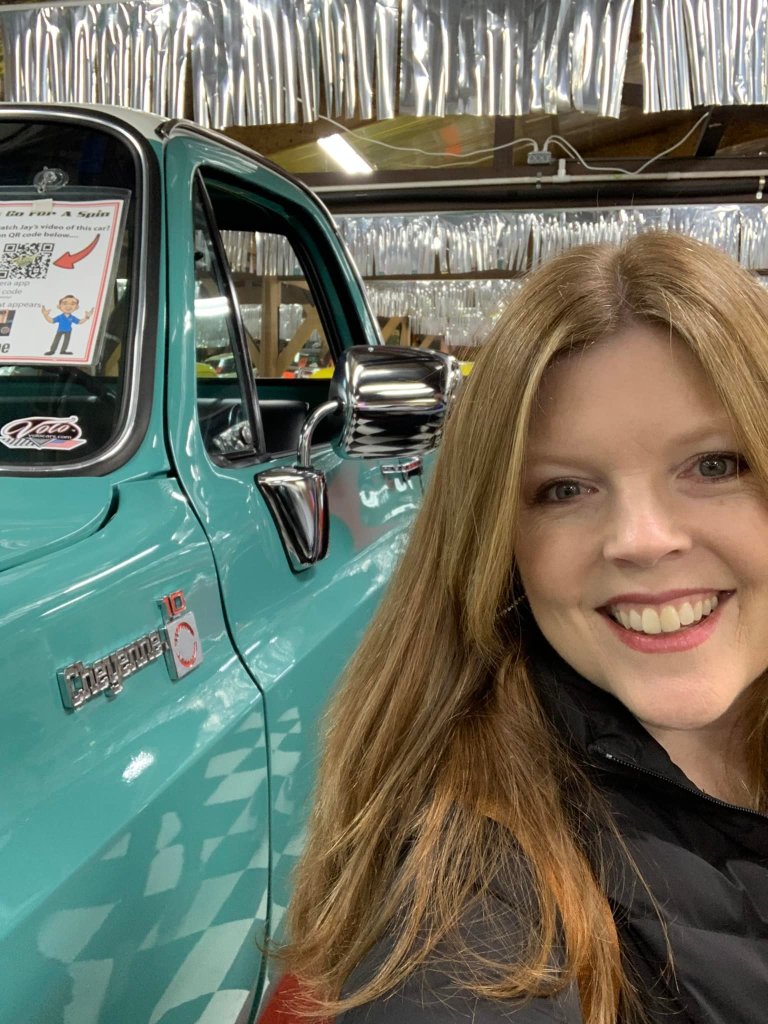
Whenever I think of “alignment” my mind automatically goes to cars (maybe because we recently went to an auto museum 😉).
My husband is wealth of knowledge about cars, and I began peppering him with questions about what happens when a car gets out of alignment and what happens when it’s realigned. The more I learned, the more I realized what a great analogy this is to our alignment with God.
Here’s what I learned:
You know when a vehicle is misaligned because the misalignment will cause the car to veer to the left or to the right when you are driving.
If there is a misalignment, the tires might wear unevenly (and you might not even feel it)
The tires might also wear out prematurely.
Misalignment could also cause other parts of the vehicle to wear out due to stress.
Are you beginning to see the analogy here? I’ll come back to this idea toward the end and talk about what happens when a car is aligned properly.
Just like cars, it’s easy to get a little misaligned in our spiritual lives, isn’t it?
In fact, sometimes our attention can be easily diverted away from where God wants it to be.
The lures of this world can distract us just enough to get us out of line.
Let’s look at Peter, one of Jesus’ disciples, who was out of alignment.
Matthew 16
21 From that time on Jesus began to explain to his disciples that he must go to Jerusalem and suffer many things at the hands of the elders, the chief priests and the teachers of the law, and that he must be killed and on the third day be raised to life.
22 Peter took him aside and began to rebuke him. “Never, Lord!” he said. “This shall never happen to you!”
23 Jesus turned and said to Peter, “Get behind me, Satan! You are a stumbling block to me; you do not have in mind the concerns of God, but merely human concerns.”
Peter was out of alignment, but until Jesus told him, I don’t think he realized it.
We know that because Jesus tells him, “you do not have in mind the concerns of God, but merely human concerns.”
And what were those concerns?
Suffering & death – that Jesus was going to suffer many things at the hands of the elders, chief priests, and teachers of the law and then he would be killed.
Why did Jesus say Peter was a stumbling block to Him?
Could it be because the human thing to say is, “no! You won’t suffer like that!” His immediate reaction was NO to the suffering (like most of us would react). Peter’s perspective (which was more self and human-focused) didn’t allow him to see how suffering was part of, and the fulfillment of, God’s plan.
Let’s keep reading and see what happens right after Jesus rebukes Peter.
Matthew 16:24
24 Then Jesus said to his disciples, “Whoever wants to be my disciple must:
deny themselves and
take up their cross and
follow me.
It’s easy for us, like Peter, to get out of alignment when we don’t deny ourselves.
We are a self-focused culture (just think of selfies). We’re taught to “look out for #1” – but the Bible says “Do nothing out of selfish ambition or vain conceit. Rather, in humility value others above yourselves…” (Phil 2:3)
We’re told we “deserve” things – when in reality the Bible tells us in the book of Romans: the “wages of sin is death” – which is what we deserve – but the “gift of God is eternal life.” That’s not because we deserve it but because He desires it for us.
We live in a culture of self-indulgence – but the Bible says, “But seek first his kingdom and his righteousness, and all these things will be given to you.” (Mt. 6:33)
We tend to want to avoid suffering – when the Bible tells us that “the apostles left the Sanhedrin, rejoicing because they had been counted worthy of suffering disgrace for the Name.” (Acts 5:41)
I’d like for us to look at an example of two people in the Bible who stayed aligned to God and two ways they were able to do so.
The first one is Daniel:
Daniel, who had been taken captive to Babylon, had the custom of praying 3 times per day.
When a new edict came out that forbade him to pray to his God, Daniel had a choice to make.
Daniel chose to continue his custom of praying 3 times per day to his God (our God).
Even though the world was changing around him and even though the punishment for his choice was death, he chose to remain faithful and stand firm as he got on his knees to pray.
Prayer helped keep Daniel aligned to God.
The second example of someone in the Bible who stayed aligned to God was Jesus.
Let’s look at how he did it in Matthew 26:39 and following.
39 Going a little farther, he fell with his face to the ground and prayed, “My Father, if it is possible, may this cup be taken from me. Yet not as I will, but as you will.”
40 Then he returned to his disciples and found them sleeping. “Couldn’t you men keep watch with me for one hour?” he asked Peter. 41 “Watch and pray so that you will not fall into temptation. The spirit is willing, but the flesh is weak.”
42Hewent away a second time and prayed, “My Father, if it is not possible for this cup to be taken away unless I drink it, may your will be done.”
How did Jesus stay aligned to God?
He prayed (more than once) – just as Daniel had the custom of praying.
Jesus prayed “if it is possible…” and really, it was possible, but not to fulfill God’s plan.
Jesus SUBMITTED His will to God’s will
Why is this such an important example for us?
Because when we submit our will to God’s will,it aligns us to want what He wants – even if it includes suffering.
Submitting to God’s will is TRUSTING that God is sovereign and in control.
Here it doesn’t say “surrender.” Surrendering gives it back to God and takes any action, follow-up, or responsibility away from us. Submitting is actively choosing to stand behind Jesus and going where He goes – we submit to His authority, just like Jesus did to the Father here.
How do we, like Jesus, submit to God?
BY FAITH we step forward and God will give us the strength and all we need to do what He calls us to do.
Friends, I want to ENCOURAGE you. If you already know of an area or areas in your life where you are out of alignment with God, there is HOPE.
You may never have thought of God like this, but He is our Master RE-ALIGNER. 😊
We know that He realigns people because we see an amazing example in the life of Peter – you know the one to whom Jesus said: “get behind me Satan!”
Peter ended up denying Jesus three times and then after Jesus’ death, in John 21:3, he tells some of the other disciples that he’s going to go out to fish, and they say they’ll go with him.
By doing this, Peter was out of alignment. Why? Because he was supposed to be fishing for people.
But we know that he later had an amazing ministry. So how did he get realigned?
Let’s read on in the passage, one that some former teammates of mine and I like to call: Breakfast on the beach.
John 21:3 tells us that they fished all night but didn’t catch anything. Verse 4 Jesus is on the shore (but they don’t realize it’s Him) and calls out to them, “Friends, haven’t you any fish?” “No,” they answer. Jesus tells them to throw the net on the right side of the boat and they will find some. They did what He said and caught so many fish they were unable to haul the net in.
Fast forwarding a little – Peter swims to shore once he realizes it’s Jesus. Jesus invites them to eat breakfast with them . In verses 15-25, we are privy to a conversation Jesus had with Peter. Jesus does a couple of things here. First, He ensures that Peter loves him “more than these” – I think he means the fish. It makes me think of what Jesus said in Matthew “If anyone wants to be my disciple, he must deny himself…”.
Second, He tells Peter what He wants Peter to do:
Feed my lambs (v.15)
Take care of my sheep (v. 16)
Feed my sheep (v. 17)
Follow me! (v. 19)
To get realigned, I think Peter needed to be reminded that:
Jesus was alive and well (WE SERVE A LIVING GOD)
He knows more than Peter does (he told professional fishermen who hadn’t caught any fish all night, to throw the net on the right side of the boat and they caught a miraculous amount). HE KNOWS MORE AND SEES MORE THAN WE DO
He does the miraculous!
He has specific work for Peter to do. GOD HAS WORK FOR US TO DO.
Once Peter was re-aligned, he went on to have an incredible ministry and he wrote the epistles of 1st and 2nd Peter.
Friends, I believe God has ministry for us to do too – related to the individual calling He has for each of our lives. One of the best ways to fulfill that is to ensure that we are properly aligned to Him.
Let’s go back to our car analogy.
When a car is misaligned, it will veer to the left or to the right. But a properly aligned car will go straight when you let go of the steering wheel and the tires will wear as they should, because that’s how the vehicle has been designed.
In Christ, we are a new creation, and this new creation is created in holiness and righteous. By faith, we walk in it.
When a vehicle is misaligned, it can cause stress. We can relate to that in our own lives, right? However, just as proper alignment in a vehicle minimizes stress on the vehicle especially on bumpy roads, so our proper alignment with God minimizes problems when we enter a bumpy season in our lives.
My prayer for us is that we would remain faithful in prayer and regularly ensure we are aligned to God – that we want what He wants – that we go where He goes. Let us go be radiant this week!















 Go Be Radiant